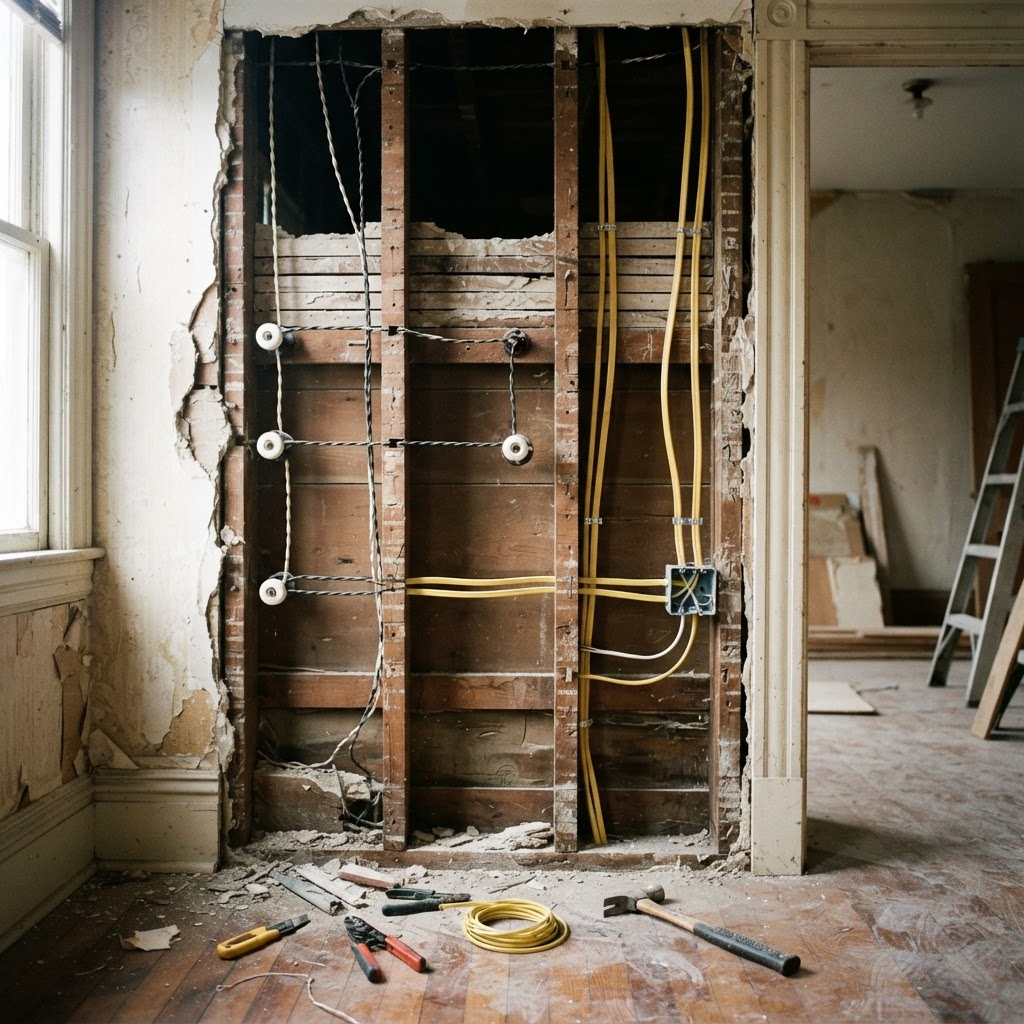
How to Replace Knob-and-Tube Wiring Safely and Effectively
Knob-and-tube wiring is one of the most common electrical hazards found in homes built before 1950. Learn why replacing it is essential and how to approach the project the right way.
Why Knob-and-Tube Wiring Is a Problem
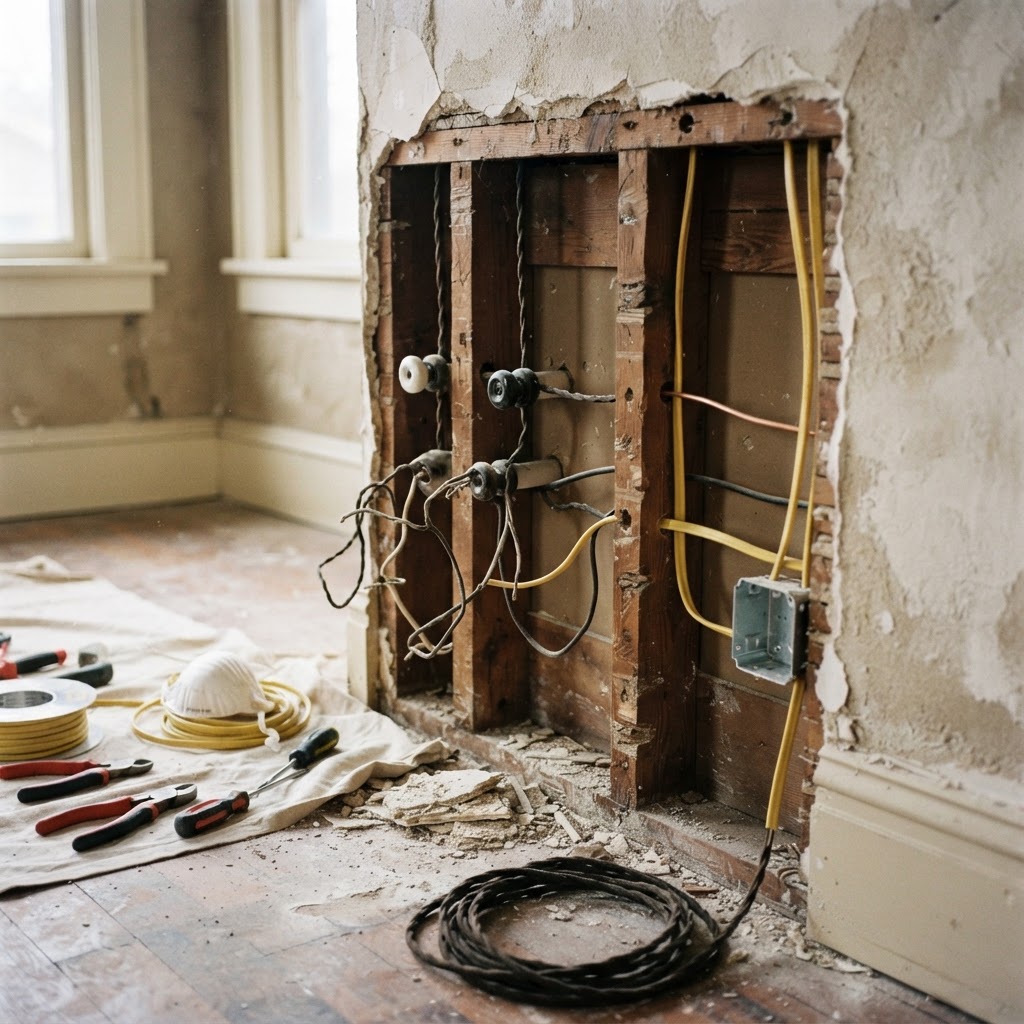
Knob-and-tube (K&T) wiring was the standard electrical system installed in American homes from the 1880s through the 1940s. It gets its name from the ceramic knobs used to anchor wires along framing members and the ceramic tubes that protected wires passing through joists and studs. At the time, it was a perfectly adequate system — but that time has long passed.
The core problem is age and design. Knob-and-tube wiring has no ground wire, meaning there is no safe path for fault current to travel. This makes it incompatible with modern three-prong appliances and dramatically increases the risk of electric shock. The insulation on K&T wiring is typically made from rubber and cloth, materials that dry out, crack, and crumble over decades of heat cycling. What was once a flexible protective sheath becomes brittle and prone to exposure.
Another critical issue is that K&T wiring was never designed to carry the electrical loads of a modern home. Televisions, refrigerators, air conditioners, dishwashers, and EV chargers draw far more current than early 20th-century households ever demanded. Overloaded K&T circuits are a leading cause of house fires in older properties.
The Risks of Leaving It in Place
Many homeowners inherit knob-and-tube wiring and choose to leave it alone, especially if it appears to be functioning. This is a dangerous gamble. Insurance companies increasingly refuse to cover homes with active K&T wiring, or they charge significantly higher premiums. If you are purchasing an older home, your lender may require K&T replacement before approving a mortgage.
Fire risk is the most serious concern. Because K&T wiring relies on open-air cooling, any insulation installed around it — even standard attic insulation — traps heat and can cause wires to overheat and ignite. Many well-meaning energy upgrades in older homes have inadvertently created fire hazards by burying K&T wiring under blown-in insulation. Additionally, over decades of use, previous owners may have spliced modern wiring into the old K&T system incorrectly, creating junction points that are neither code-compliant nor safe.
There is also the hidden damage factor. Rodents frequently chew K&T wiring in attics and wall cavities. Without a full inspection, you may have no idea how compromised your system actually is.
What the Replacement Process Involves
Replacing knob-and-tube wiring is a whole-house rewiring project. It is not a weekend DIY job for most homeowners. A licensed electrician will need to run new non-metallic sheathed cable (commonly called Romex) or conduit throughout the home, connecting to a modern circuit breaker panel. The process typically involves working from attic spaces and basements, drilling through framing, and fishing wire through finished walls — all while minimizing cosmetic damage.
In plaster-walled homes, which are common in K&T-era houses, the rewiring process is more involved. Electricians experienced with historic properties will use low-voltage cameras, fish tapes, and strategic small-opening techniques to route new wire with minimal plaster removal. Expect some patching and repainting regardless, but a skilled crew can limit the disruption significantly.
The project will also likely include upgrading your electrical panel from an older fuse box to a modern 200-amp breaker panel, adding GFCI protection in kitchens, bathrooms, and exterior outlets, and ensuring all receptacles are properly grounded.
Code Considerations and Contractor Advice
All rewiring work requires permits and inspections in virtually every jurisdiction. Never hire a contractor who suggests skipping the permit process — this exposes you to liability and can complicate future home sales. Your local building department will require a licensed electrician to pull the permit and have the work inspected before walls are closed up.
When vetting contractors, ask specifically about their experience rewiring homes with plaster walls and balloon framing, both of which present unique challenges in pre-1950 construction. Request a detailed written scope of work that specifies how existing K&T will be decommissioned, how new circuits will be routed, and what finish repairs are included.
Budget realistically. A full rewire on a 1,500 to 2,000 square foot home typically runs between $8,000 and $20,000 depending on your region and home complexity. It is a significant investment — but one that makes your home insurable, sellable, and genuinely safe for the people living in it.
More Modernization Guides
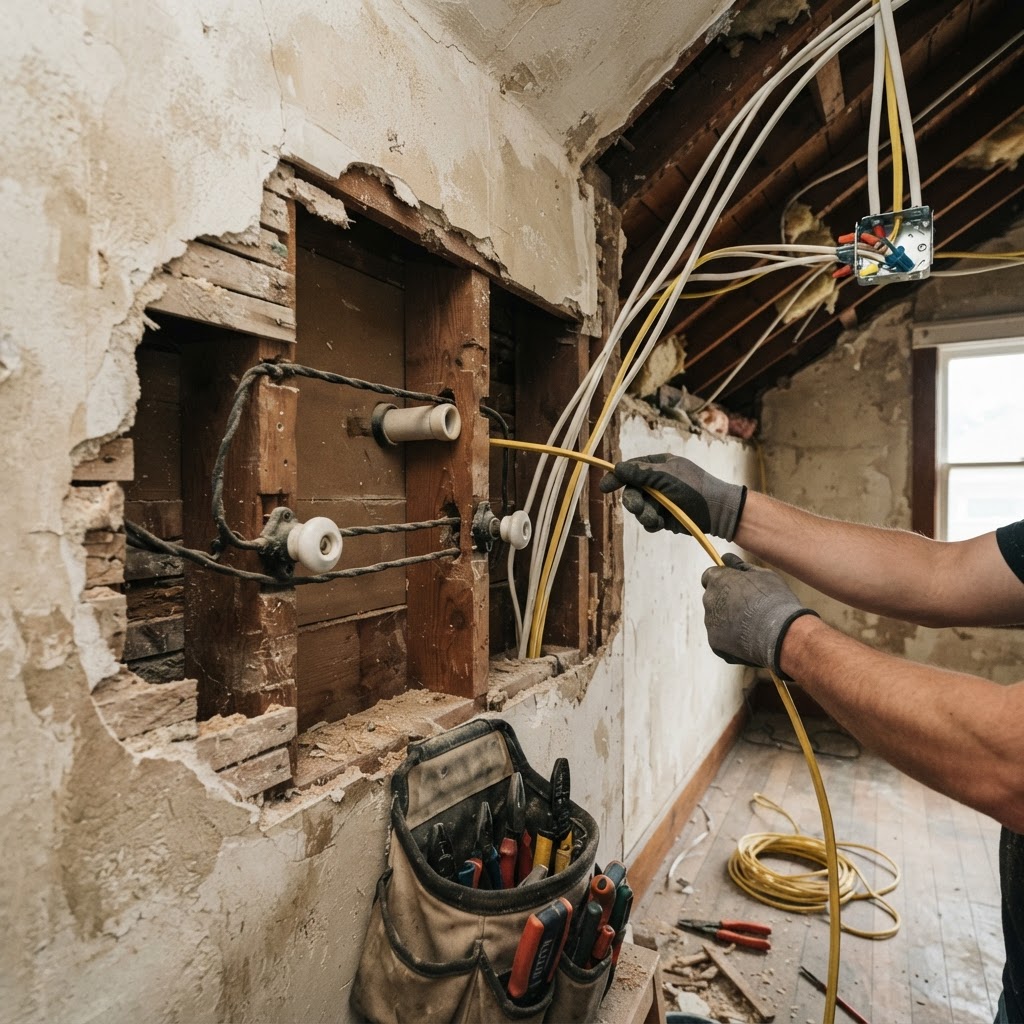
How to Replace Knob-and-Tube Wiring in Older Homes
Knob-and-tube wiring is one of the most common—and dangerous—electrical hazards found in homes built before 1950. Learn what replacing it involves, why it matters, and how to do it safely and to code.
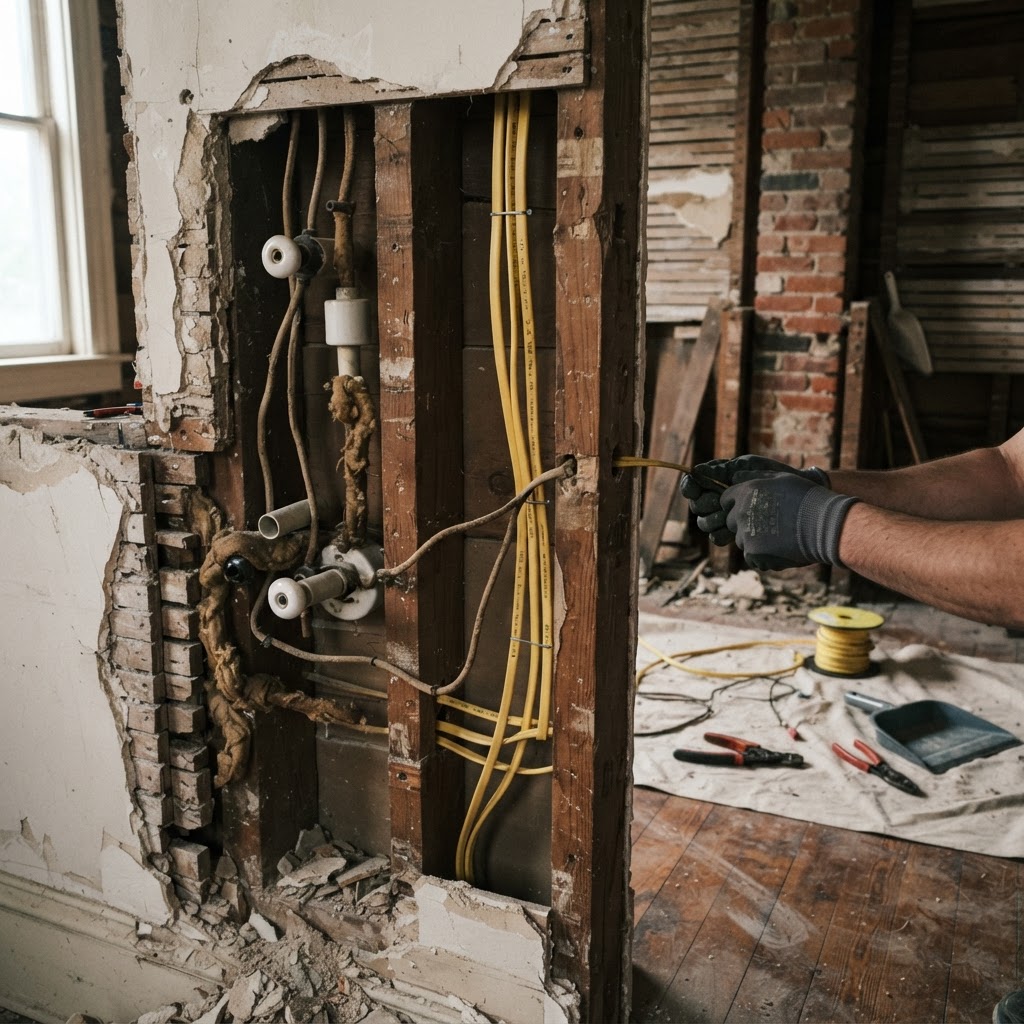
How to Replace Knob-and-Tube Wiring in Older Homes
Knob-and-tube wiring is one of the most common and dangerous electrical hazards found in homes built before 1950. Learn why replacing it is essential and how to approach the project safely and effectively.
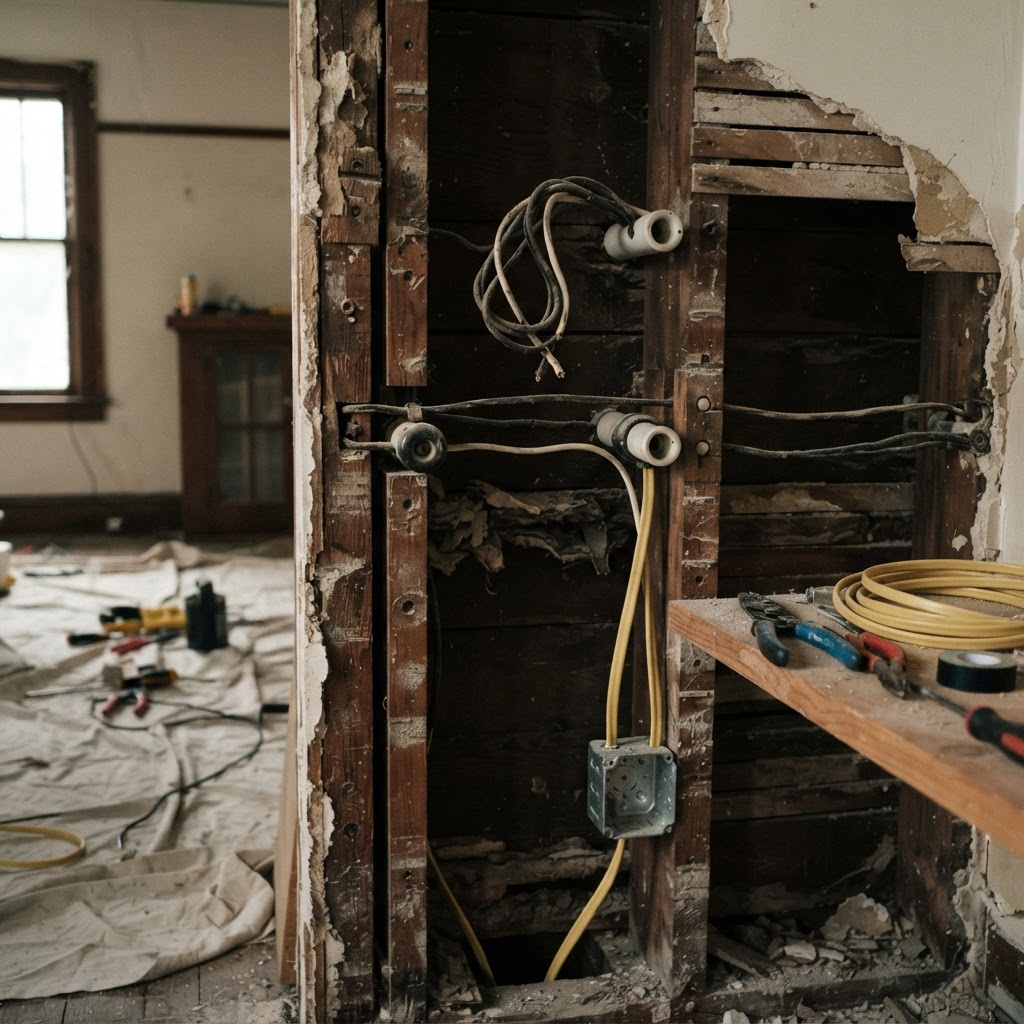
How to Replace Knob-and-Tube Wiring Safely and Smartly
Knob-and-tube wiring is one of the most common and dangerous electrical hazards in older homes. Learn what it involves, why it must go, and how to plan a safe, code-compliant replacement.
How to Replace Knob-and-Tube Wiring Safely and Effectively
Knob-and-tube wiring is a hidden hazard in millions of older homes. Learn why replacing it is critical, what the process involves, and how to work with contractors to do it right.