How to Replace Knob-and-Tube Wiring Safely
Knob-and-tube wiring is a hidden hazard lurking in millions of older homes. Learn why replacing it is critical, what the process involves, and how to work with an electrician to do it right.
What Is Knob-and-Tube Wiring and Why It's a Problem
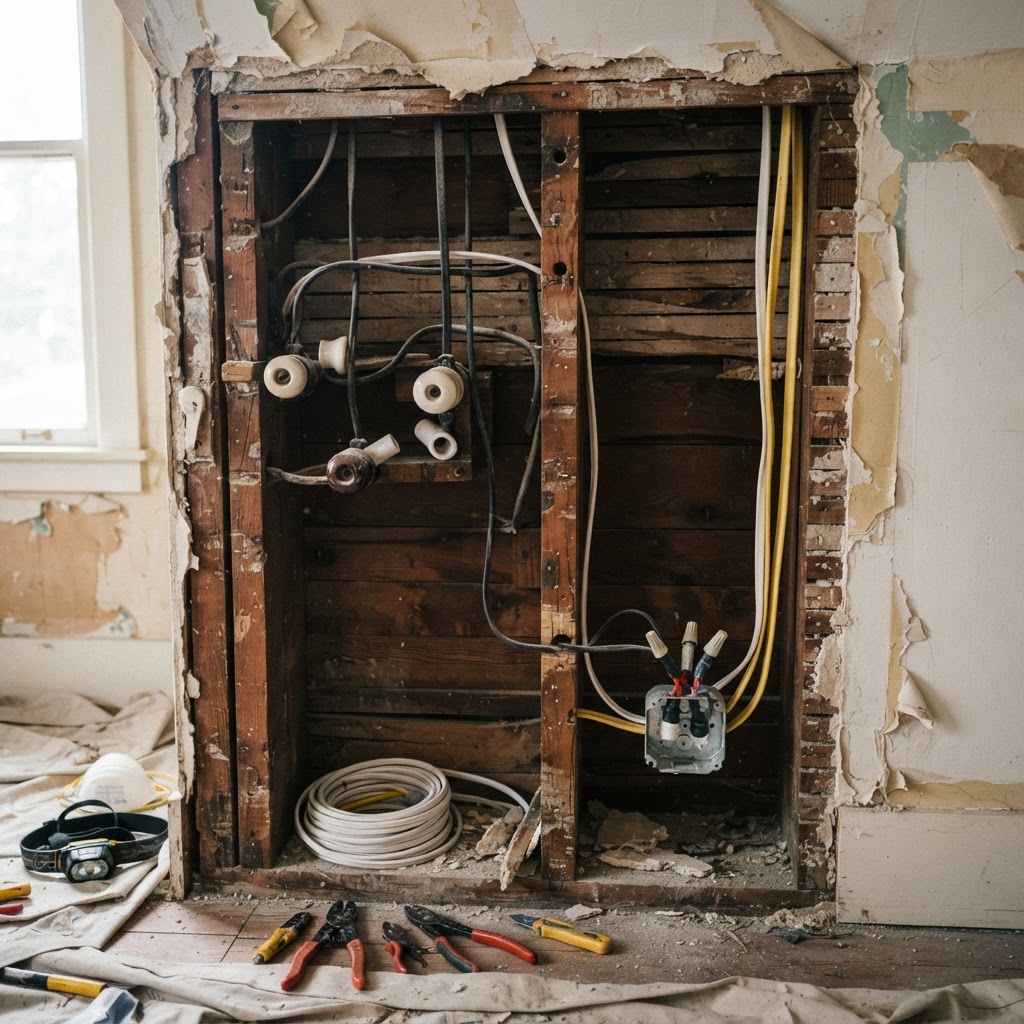
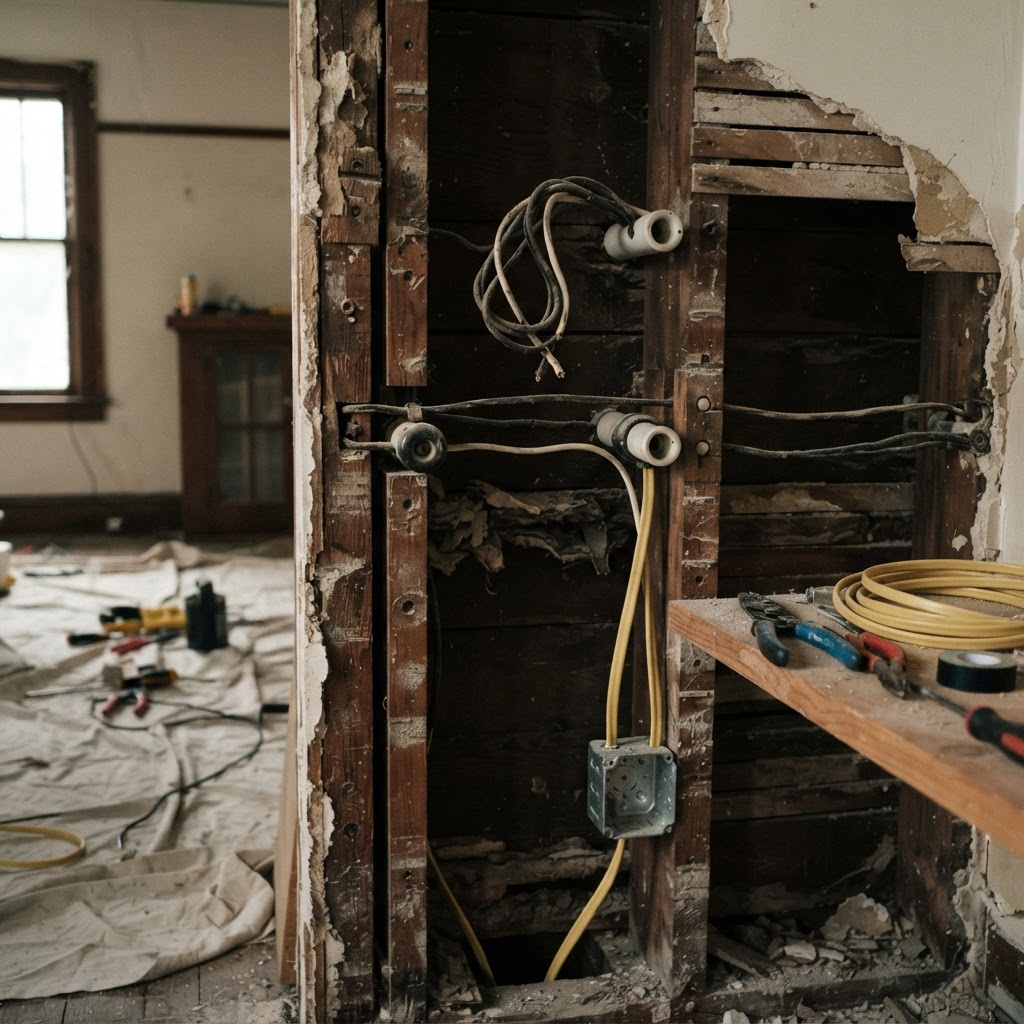
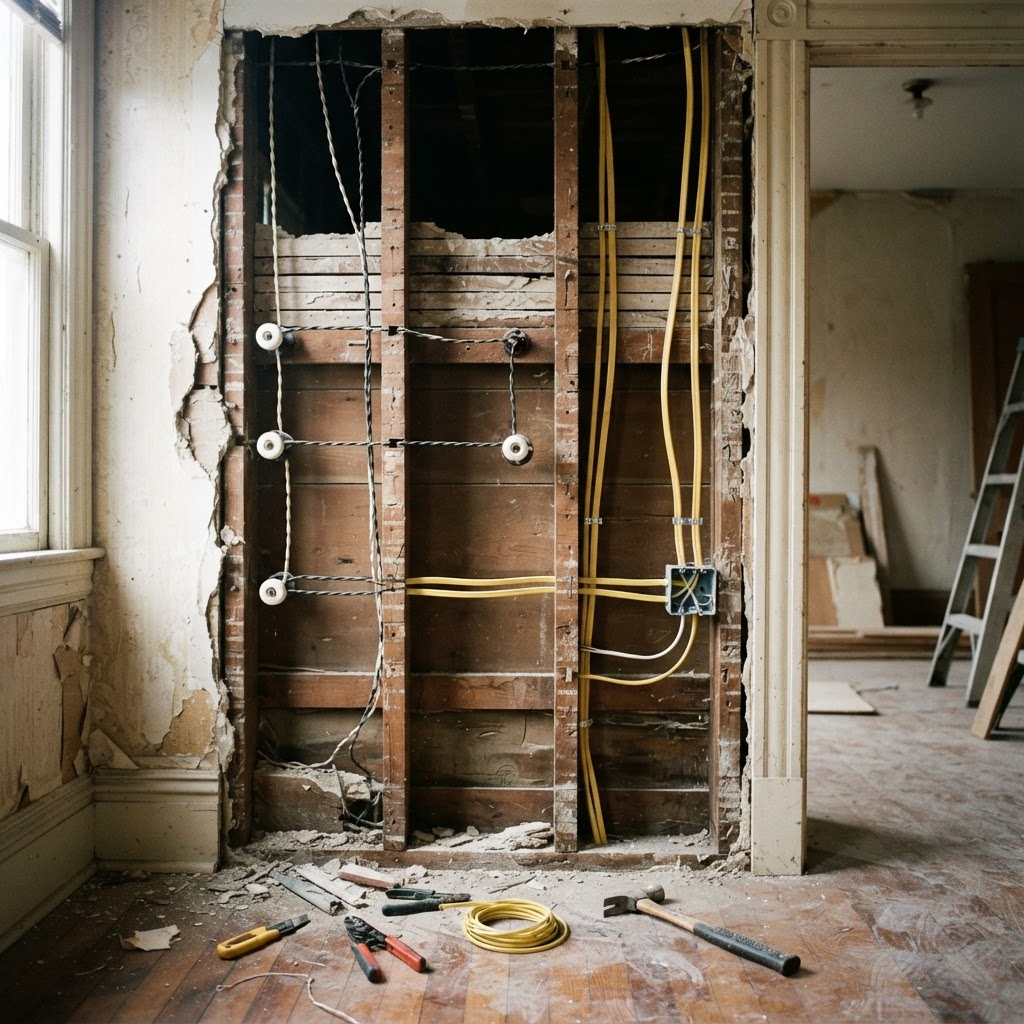
Knob-and-tube (KT) wiring was the standard electrical system installed in American homes from roughly the 1880s through the 1940s. It gets its name from the ceramic knobs that anchor the wires to framing members and the ceramic tubes that protect wires where they pass through wood. At the time, it was a perfectly adequate system — but that time has long passed.
The core issue is age and design. KT wiring uses only two conductors: a hot wire and a neutral wire. There is no ground wire, which means any appliance or outlet on the circuit has no fault protection. Modern electronics and appliances depend on a grounded system for safe operation. Beyond that, decades of heat cycling, pest damage, amateur splices, and insulation contact have left most surviving KT systems brittle, overloaded, and genuinely dangerous.
The Real Risks of Leaving Knob-and-Tube Wiring in Place
The most serious risk is fire. KT wiring was designed for the electrical loads of a pre-appliance era — a few lights, maybe a radio. Today's homes draw vastly more current, and older circuits were often upgraded by simply swapping in larger fuses or breakers without upgrading the wire gauge. Overloaded wiring generates heat, and heat inside wall cavities and attic framing is a recipe for disaster.
There's also the insulation problem. KT wiring was designed to dissipate heat into open air. When well-meaning homeowners or contractors buried it under blown-in attic insulation, they unknowingly created a fire hazard. Many home insurance companies now refuse to cover or renew policies on homes with active KT wiring, and some mortgage lenders won't finance them. If you're buying or selling an older home, an inspector who finds live KT wiring will almost certainly flag it as a material defect.
Finally, the rubber insulation coating on KT wires becomes hard and brittle over time. Even minor vibration or contact can cause the insulation to crack and flake away, leaving live conductors exposed inside your walls.
What the Replacement Process Actually Involves
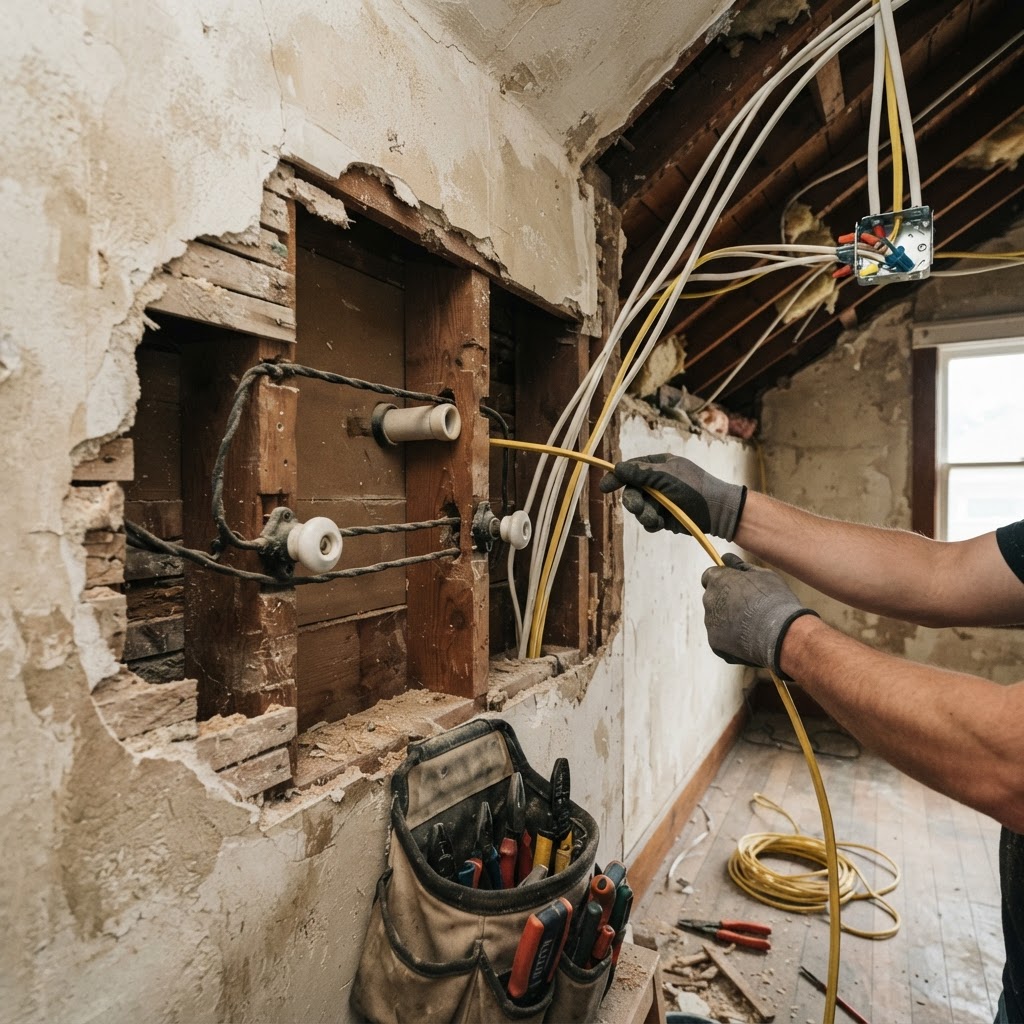
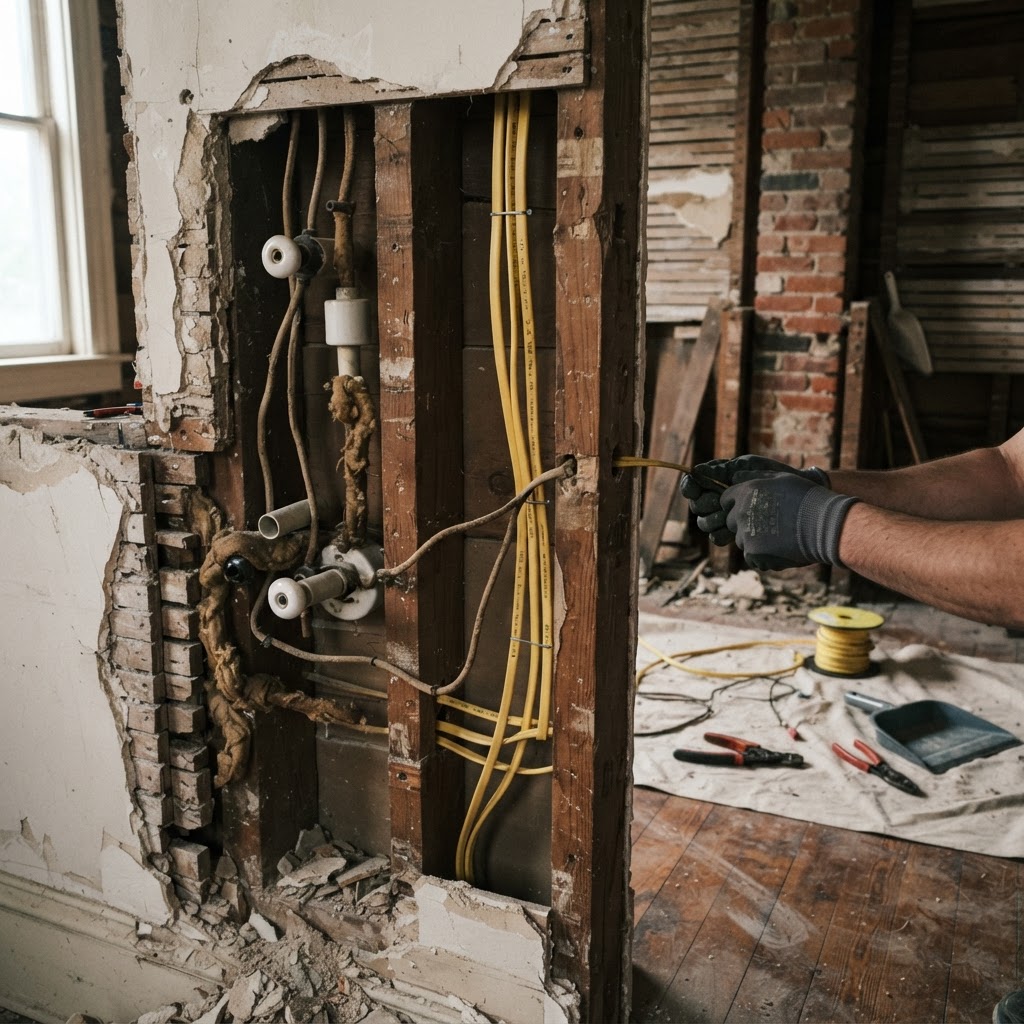
Replacing knob-and-tube wiring is a whole-house rewire, and it's one of the more invasive renovation projects you can undertake. A licensed electrician will pull new non-metallic sheathed cable (commonly called Romex) or conduit through your walls, ceilings, and floors, replacing every circuit from the panel outward. In most cases, this means opening walls — either by cutting drywall or plaster, or by using a fish-tape technique through existing openings like outlet boxes and light fixtures.
In historic homes with original plaster walls, the work requires extra care. Skilled electricians working in older properties often use a combination of small access cuts, attic and basement runs, and flexible drill bits to minimize plaster damage. Expect some cosmetic repair work regardless. The project typically includes upgrading the main panel if it's also original equipment, installing grounded three-prong outlets throughout, and adding arc-fault circuit interrupter (AFCI) breakers on bedroom circuits as required by the National Electrical Code.
Code Requirements and Permits
Any whole-house rewire requires a permit and inspections. This is not optional and not something to skip — your insurance company may deny a future claim if unpermitted electrical work contributed to a loss. The NEC and local amendments will dictate requirements like AFCI protection, GFCI outlets in kitchens and bathrooms, and minimum circuit counts for kitchens and laundry areas. Your electrician should handle permit pulling, but it's worth confirming this upfront.
If your home is on a historic register or in a historic district, check with your local preservation office before work begins. Some jurisdictions have specific guidelines about how interior work must be performed to protect historic fabric.
Practical Advice for Hiring and Managing the Project
Get at least three bids from licensed electricians with documented experience in older homes. Ask specifically about their approach to plaster preservation and how they handle knob-and-tube removal versus abandonment — ideally, old wiring should be fully removed, not just de-energized and left in place. Request a written scope of work that details circuit counts, panel specs, and finish expectations.
Budget realistically. A full rewire in a 1,500–2,000 square foot older home typically runs between $8,000 and $20,000 depending on complexity, region, and wall access. It's a significant investment, but it's also one that makes your home insurable, sellable, and genuinely safe for the next generation of occupants.
More Modernization Guides
How to Replace Knob-and-Tube Wiring in Older Homes
Knob-and-tube wiring is one of the most common—and dangerous—electrical hazards found in homes built before 1950. Learn what replacing it involves, why it matters, and how to do it safely and to code.
How to Replace Knob-and-Tube Wiring in Older Homes
Knob-and-tube wiring is one of the most common and dangerous electrical hazards found in homes built before 1950. Learn why replacing it is essential and how to approach the project safely and effectively.
How to Replace Knob-and-Tube Wiring Safely and Smartly
Knob-and-tube wiring is one of the most common and dangerous electrical hazards in older homes. Learn what it involves, why it must go, and how to plan a safe, code-compliant replacement.
How to Replace Knob-and-Tube Wiring Safely and Effectively
Knob-and-tube wiring is one of the most common electrical hazards found in homes built before 1950. Learn why replacing it is essential and how to approach the project the right way.