How to Replace Knob-and-Tube Wiring Safely
Knob-and-tube wiring is a hidden fire hazard lurking in millions of older homes. Learn why replacing it is critical and how to approach the upgrade the right way.
What Is Knob-and-Tube Wiring and Why Does It Matter?
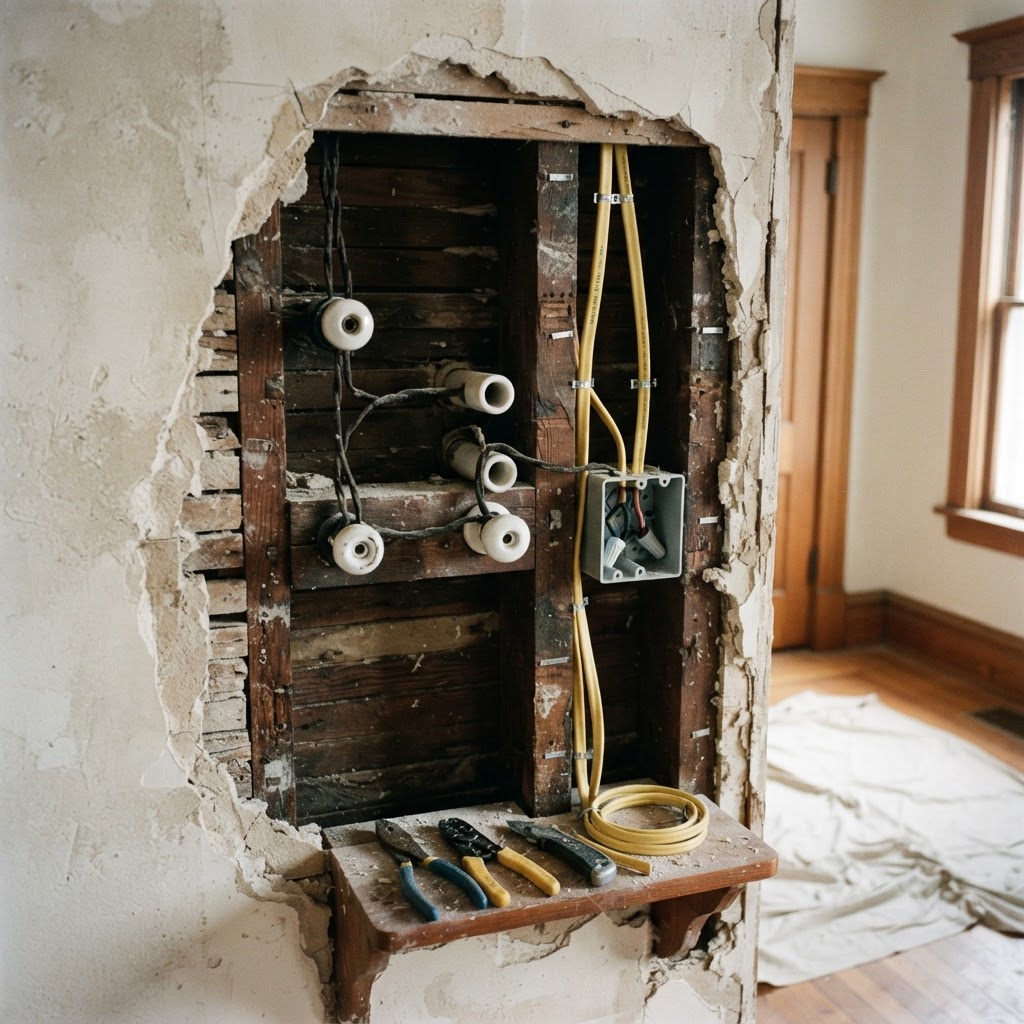
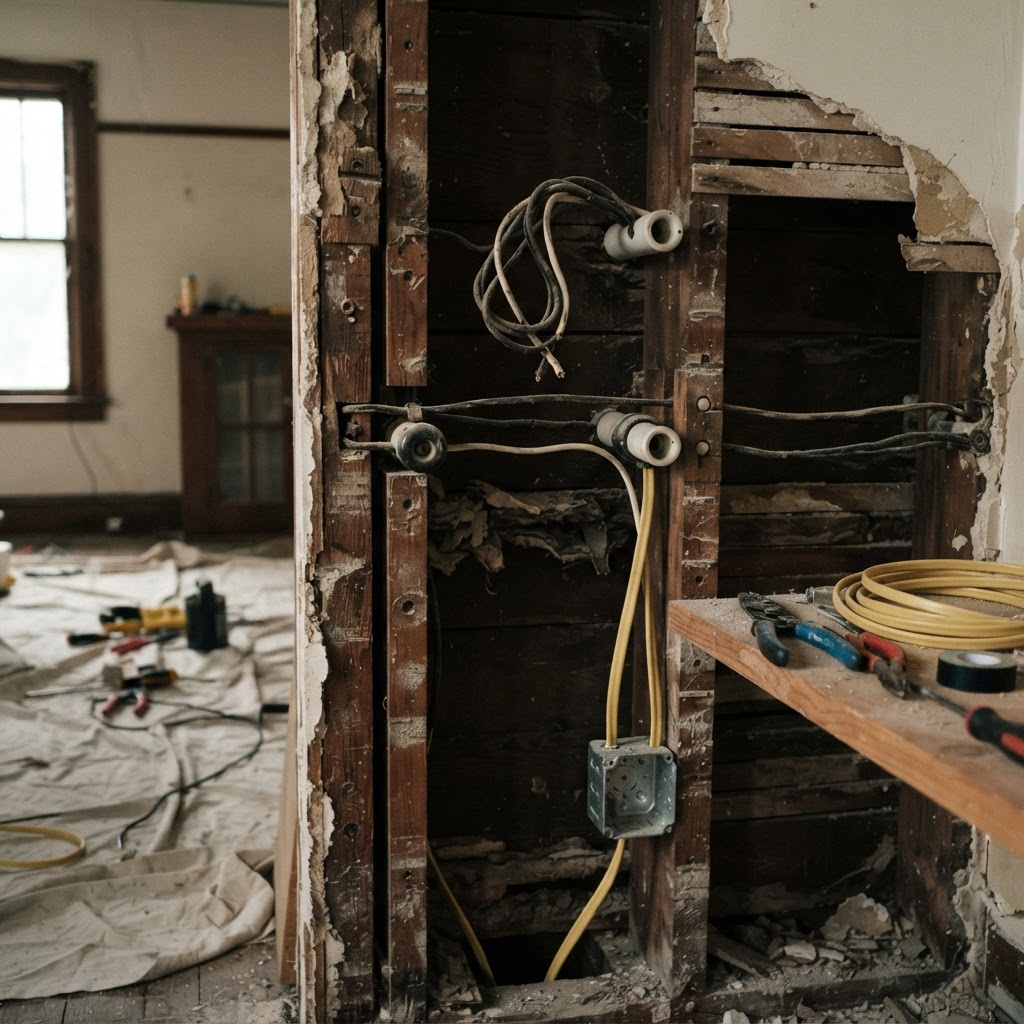
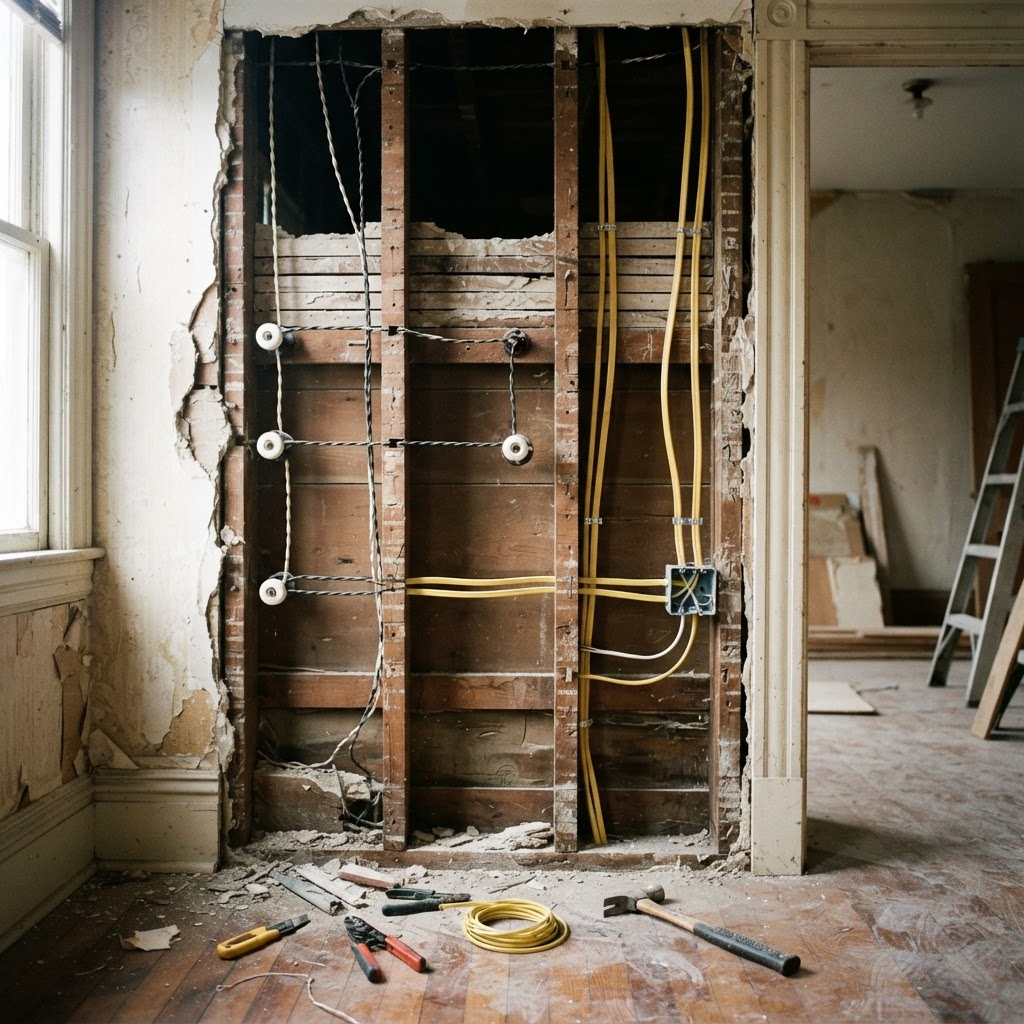
Knob-and-tube (K&T) wiring was the standard electrical system installed in American homes from roughly the 1880s through the 1940s. Named for the ceramic knobs that anchor wires to framing and the ceramic tubes that protect wires passing through joists and studs, this system was perfectly adequate for the electrical demands of its era. The problem is that most homes built then are still standing today — and their wiring has not kept pace with modern electrical loads.
Over decades, the rubber insulation coating K&T wires becomes brittle, cracks, and crumbles away. What remains is bare, energized copper running through your walls and attic. This is a leading cause of house fires in older properties. Insurance companies increasingly refuse to cover homes with active knob-and-tube wiring, or charge dramatically higher premiums. If you own or are purchasing a home built before 1950, a licensed electrician should inspect the wiring immediately.
The Real Risks of Leaving Knob-and-Tube in Place
Beyond deteriorating insulation, K&T wiring poses several specific dangers that homeowners must understand. First, the system has no ground wire. Modern appliances and electronics rely on a ground path to safely divert fault current. Without it, a wiring fault can send dangerous voltage through appliance casings and metal fixtures, creating serious shock hazards.
Second, knob-and-tube was designed for 60-amp service panels feeding minimal lighting and a few small appliances. Today's homes routinely draw 200 amps or more through refrigerators, air conditioners, washing machines, and EV chargers. Overloading old K&T circuits causes the wires to overheat chronically, accelerating insulation breakdown. Third — and critically — K&T wiring should never be buried in blown-in insulation. The system was designed to dissipate heat through open air. Covering it traps heat and creates a direct fire risk inside your walls and attic.
What Replacing Knob-and-Tube Actually Involves
A full knob-and-tube replacement is a significant but manageable renovation project. The process begins with a whole-home electrical inspection to map all active K&T circuits. In many older homes, K&T has already been partially replaced over the years, leaving a hybrid system that must be carefully traced to identify what remains live.
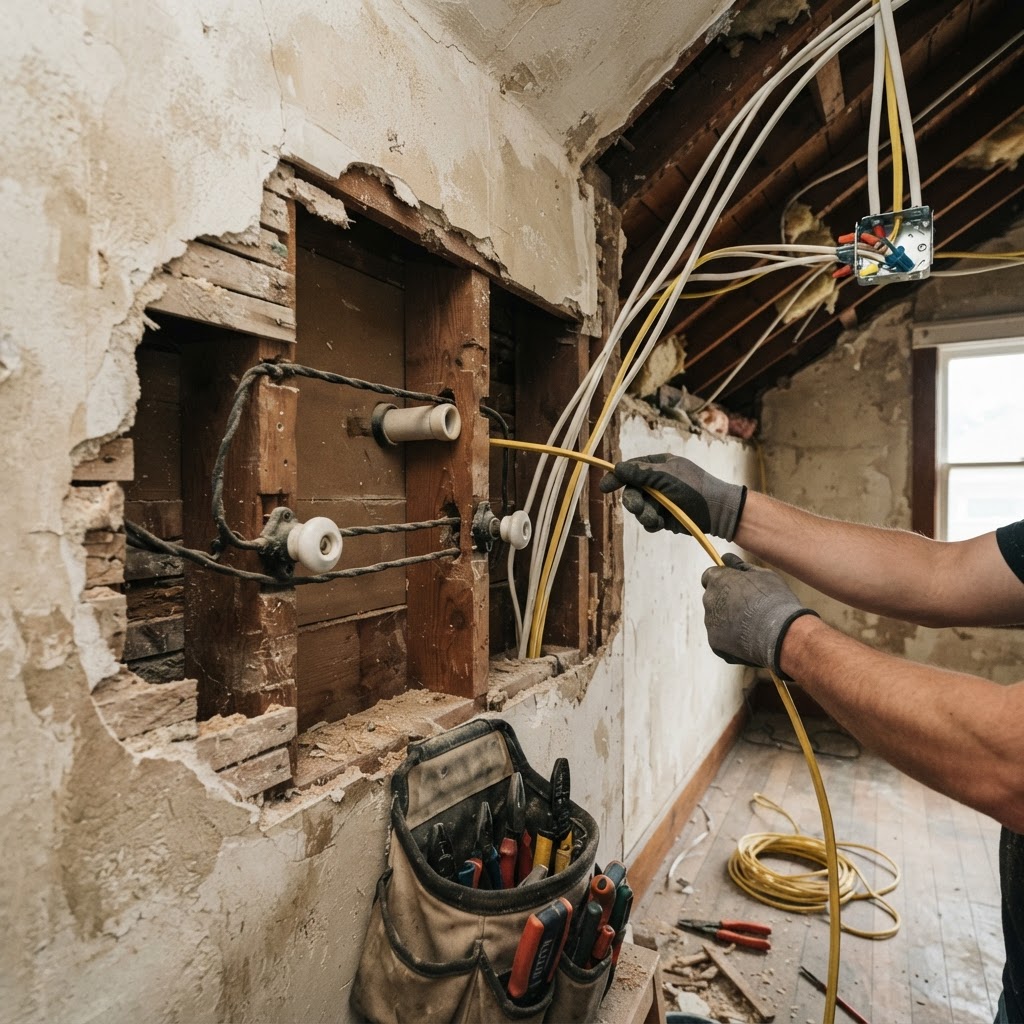
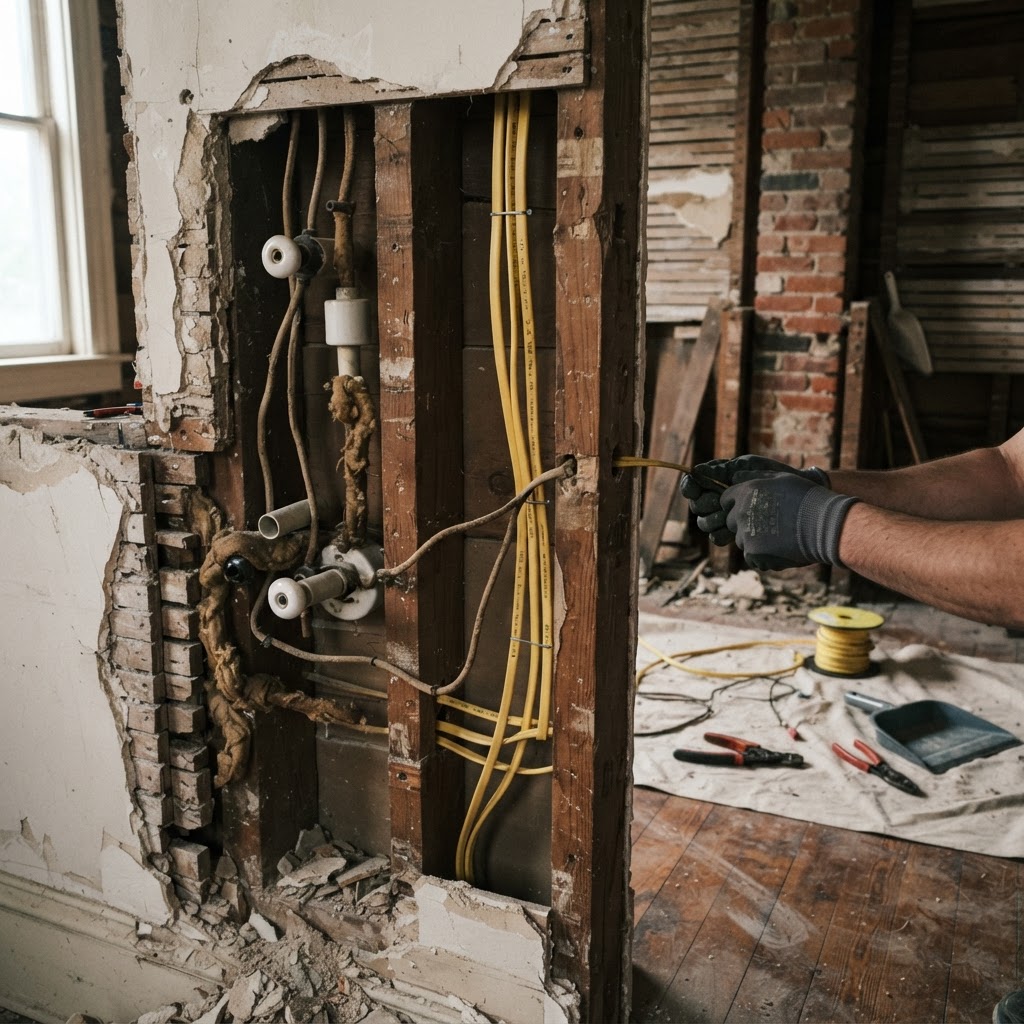
Replacement involves running new NM-B (Romex) or conduit-protected wiring from an upgraded panel — typically a 200-amp service — through walls, floors, and ceilings to every outlet, switch, and fixture. In plaster-wall homes, electricians use a combination of fishing techniques, strategic cut-and-patch access points, and attic or basement runs to minimize wall damage. Expect some drywall or plaster repair after the job. The entire project, depending on home size, typically takes three to seven days for a licensed crew and costs between $8,000 and $20,000 for a full house rewire.
Code Requirements and Safety Considerations
All electrical work must be permitted and inspected by your local building department. Pulling permits is not optional — unpermitted electrical work can void your homeowner's insurance, complicate a future home sale, and leave dangerous work unchecked. A licensed master electrician should lead the project, and the finished work must comply with the current National Electrical Code (NEC), which requires grounded outlets, AFCI protection on bedroom circuits, and GFCI protection in kitchens, bathrooms, and exterior locations.
If your home still has a fuse box or a 60- or 100-amp panel, combine the rewire with a full panel upgrade to 200-amp service. This is usually cost-effective to do simultaneously and ensures the new wiring system has the capacity it needs.
Practical Advice for Hiring and Managing the Project
Get at least three written bids from licensed electricians with specific experience in older home rewiring. Ask each contractor how they plan to handle plaster walls, whether they will install AFCI breakers throughout, and how they will document the new circuit layout. Request a detailed circuit map as a project deliverable — this is invaluable for future repairs.
Before work begins, clear attic access and move belongings away from walls. After the rewire, patch plaster or drywall promptly to protect new wiring from physical damage. Finally, schedule a final inspection and keep all permits and inspection records with your home file. Replacing knob-and-tube wiring is one of the highest-impact safety investments you can make in an older home.
More Modernization Guides
How to Replace Knob-and-Tube Wiring in Older Homes
Knob-and-tube wiring is one of the most common—and dangerous—electrical hazards found in homes built before 1950. Learn what replacing it involves, why it matters, and how to do it safely and to code.
How to Replace Knob-and-Tube Wiring in Older Homes
Knob-and-tube wiring is one of the most common and dangerous electrical hazards found in homes built before 1950. Learn why replacing it is essential and how to approach the project safely and effectively.
How to Replace Knob-and-Tube Wiring Safely and Smartly
Knob-and-tube wiring is one of the most common and dangerous electrical hazards in older homes. Learn what it involves, why it must go, and how to plan a safe, code-compliant replacement.
How to Replace Knob-and-Tube Wiring Safely and Effectively
Knob-and-tube wiring is one of the most common electrical hazards found in homes built before 1950. Learn why replacing it is essential and how to approach the project the right way.