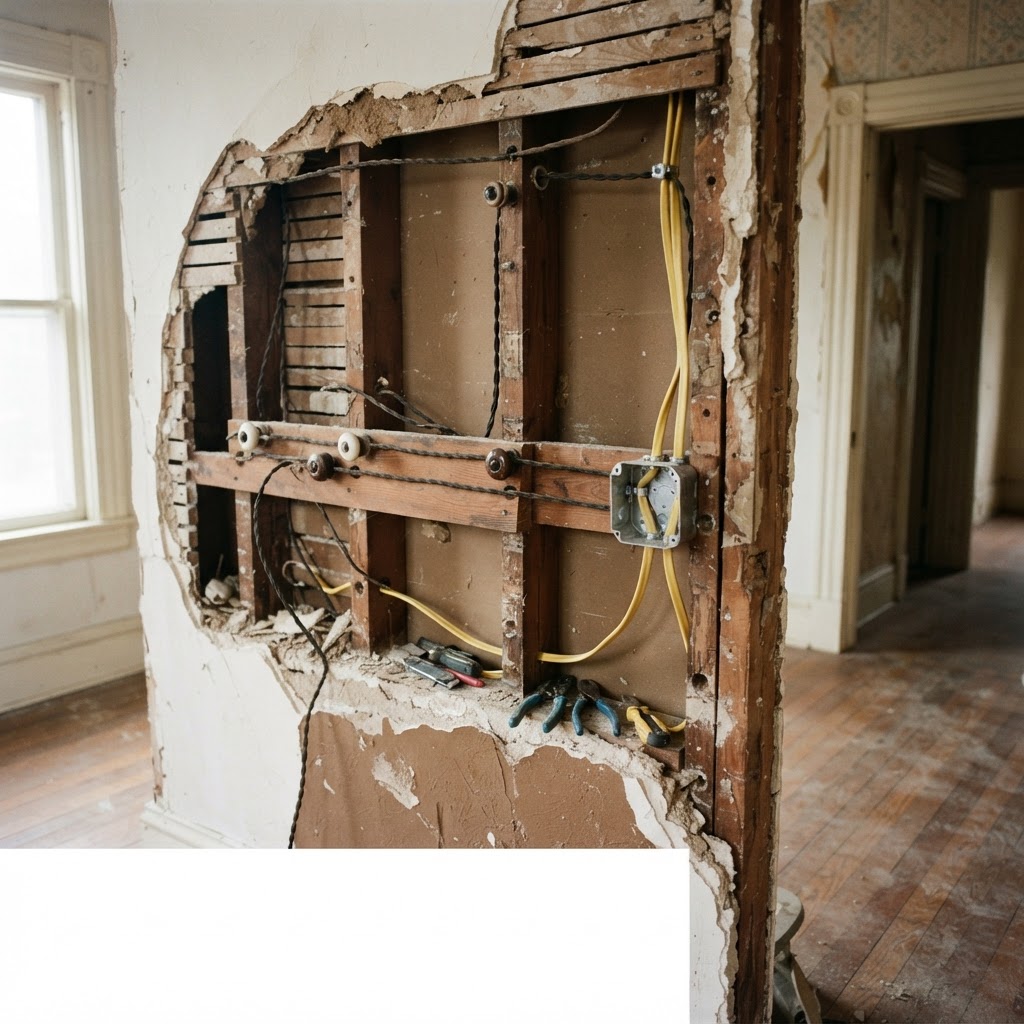
How to Replace Knob-and-Tube Wiring Safely
Knob-and-tube wiring is one of the most common and serious hazards in homes built before 1950. Learn why replacing it is essential, what the process involves, and how to work with contractors to get it done right.
Why Knob-and-Tube Wiring Is a Problem
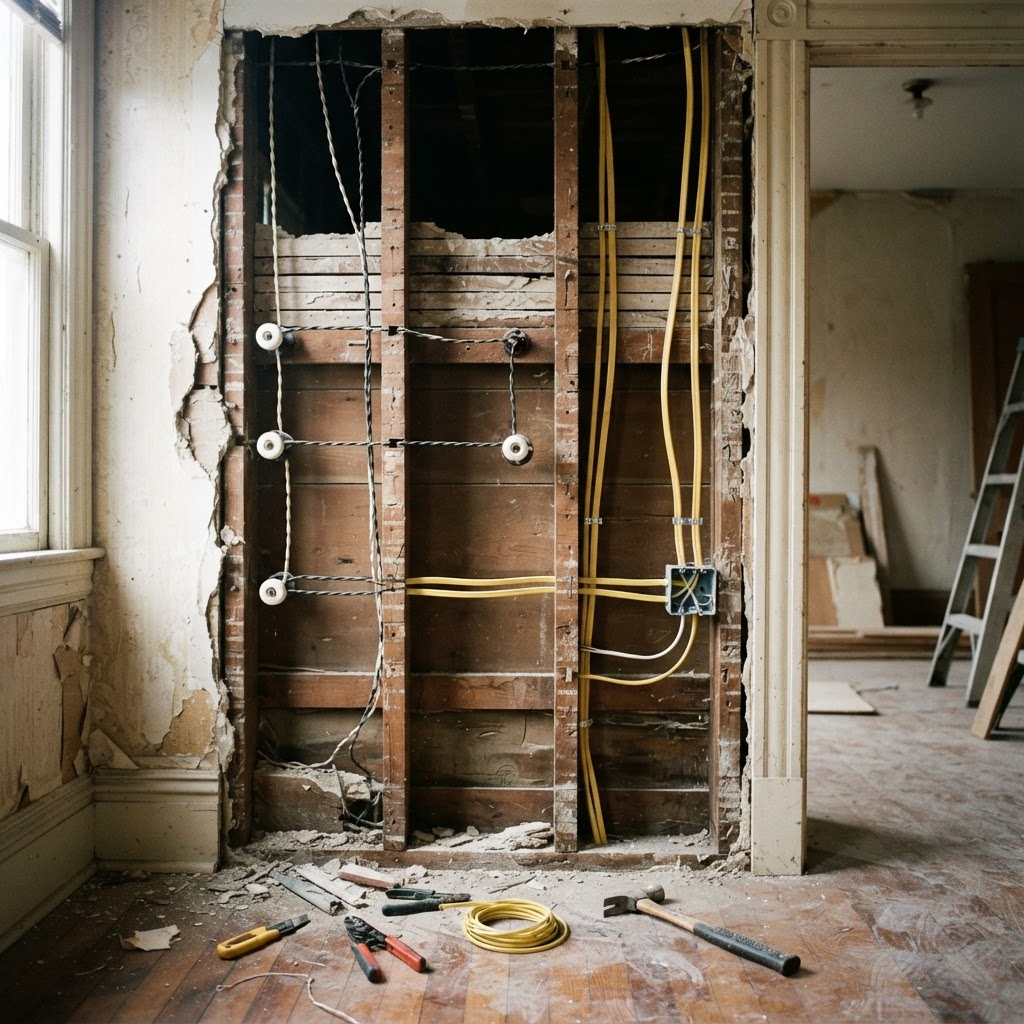
Knob-and-tube (K&T) wiring was the standard electrical system installed in American homes from roughly the 1880s through the 1940s. It consists of single-conductor copper wires routed through ceramic knobs fastened to framing members and ceramic tubes where wires pass through joists or studs. At the time, it was a reasonable solution — but that time has long passed.
The core problem is age. Rubber insulation on K&T wiring becomes brittle and cracks after 70 to 100 years, exposing live conductors. Unlike modern wiring, knob-and-tube has no ground wire, meaning any appliance or outlet on the circuit offers no fault protection. It also lacks the capacity to handle today's electrical loads — modern kitchens, home offices, and HVAC systems draw far more power than these older circuits were designed to carry.
Insurance companies have taken notice. Many homeowners discover that their insurer will not renew a policy — or will charge significantly higher premiums — once K&T wiring is identified during a home inspection. If you are buying or selling an older home, the presence of knob-and-tube wiring is frequently flagged as a material defect.
The Risks of Leaving It in Place
Fire is the most serious risk. Degraded insulation combined with decades of connections that have been spliced, taped, or modified by amateur hands creates genuine ignition hazards inside wall cavities. Unlike modern wiring protected by sheathing, K&T conductors run separately and can contact insulation or stored materials in attics and basements.
A second critical danger is the common practice of insulating over knob-and-tube wiring. Many well-meaning homeowners have added blown-in attic insulation without realizing that K&T wiring depends on open-air cooling to function safely. Burying it in insulation traps heat and dramatically increases fire risk. The National Electrical Code (NEC) explicitly prohibits covering K&T wiring with insulation unless the system is inspected and certified by a licensed electrician — and even then, most professionals recommend full replacement.
There is also the ongoing inconvenience of two-prong, ungrounded outlets throughout the house. Sensitive electronics, appliances with three-prong plugs, and GFCI protection all require a grounded system. Living with adapters is not a long-term solution and does nothing to address the underlying hazard.
What the Replacement Process Involves
Replacing knob-and-tube wiring is a whole-house rewiring project. A licensed electrician will install new NM-B (Romex) cable or conduit-run wiring throughout the home, replacing every circuit back to the electrical panel. In most cases, this also means upgrading the main service panel if it has not already been updated — older 60-amp or 100-amp fuse panels are frequently undersized for modern loads.
The work typically requires opening walls and ceilings to run new cable, which means coordination with a drywall or plaster contractor after the electrical work is complete. In historic homes with original plaster walls, some electricians use a fishing technique — routing cable through small access holes — to minimize damage, though complete concealment without some patching is rarely possible. Plan for cosmetic restoration as part of your overall budget.
Expect the project to take several days to a week for an average-sized home, with the electrical portion alone ranging from $8,000 to $20,000 or more depending on home size, local labor rates, and panel upgrades required. Always obtain at least three quotes and verify that your electrician is licensed, insured, and will pull the necessary permits.
Key Code and Safety Considerations
All rewiring work must be permitted and inspected by your local building department. This is not optional — unpermitted electrical work creates liability issues and can complicate future sales. Your electrician should be familiar with any local amendments to the NEC, particularly regarding historic properties where code officials sometimes allow modified approaches.
Once new wiring is in place, all outlets in kitchens, bathrooms, garages, and exterior locations must be GFCI-protected per current code. Arc-fault circuit interrupter (AFCI) breakers are now required for bedroom circuits and increasingly for other living areas — your new panel should accommodate these.
Finally, document everything. Keep copies of permits, inspection certificates, and the electrician's work summary. This paperwork is valuable for insurance purposes and essential when you eventually sell the property. Replacing knob-and-tube wiring is one of the highest-impact investments you can make in an older home's safety and long-term value.
More Modernization Guides
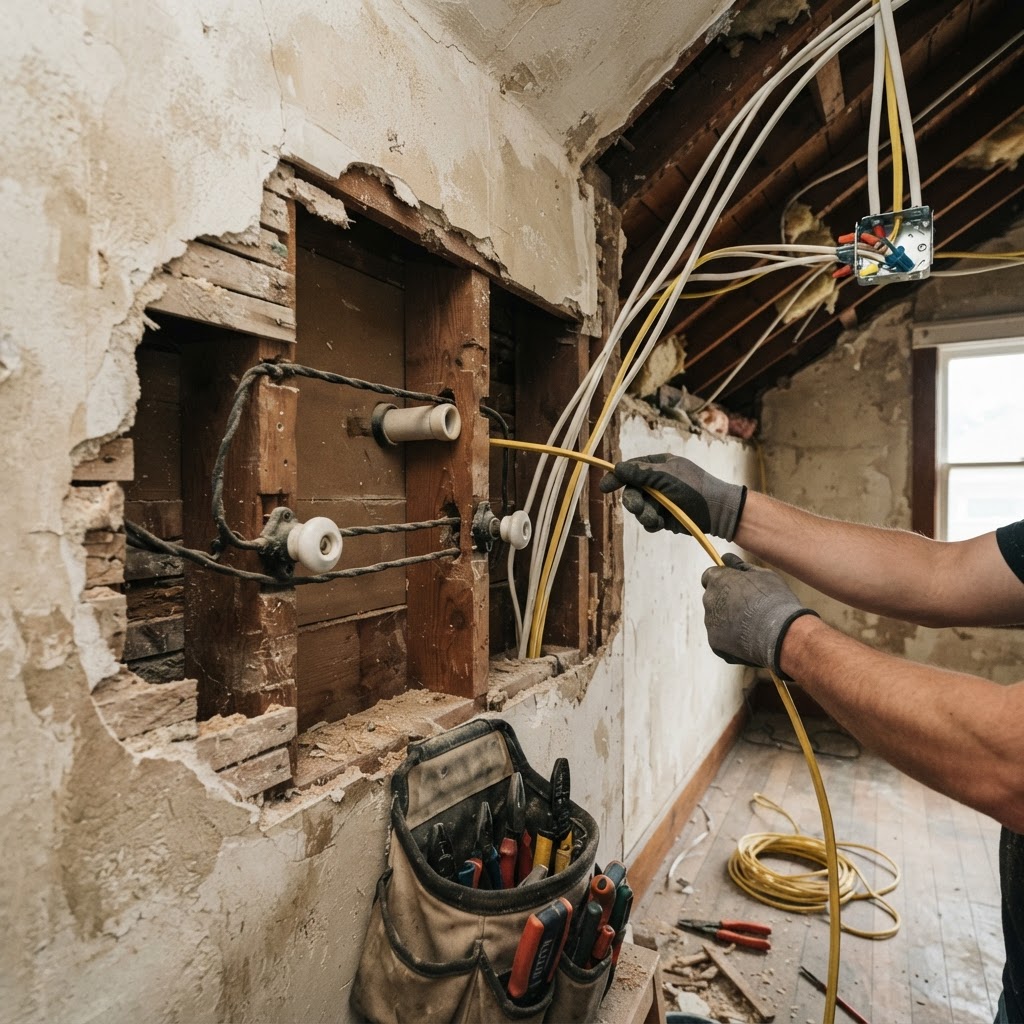
How to Replace Knob-and-Tube Wiring in Older Homes
Knob-and-tube wiring is one of the most common—and dangerous—electrical hazards found in homes built before 1950. Learn what replacing it involves, why it matters, and how to do it safely and to code.
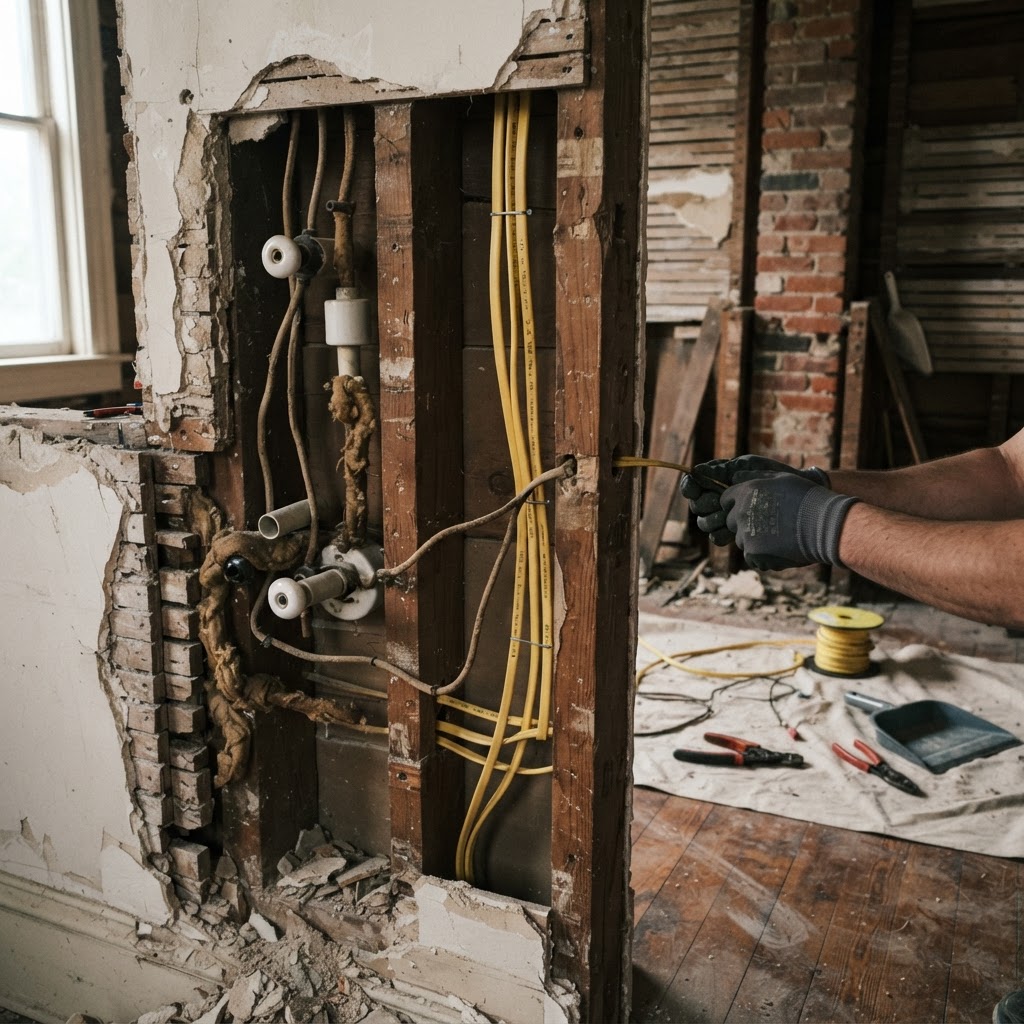
How to Replace Knob-and-Tube Wiring in Older Homes
Knob-and-tube wiring is one of the most common and dangerous electrical hazards found in homes built before 1950. Learn why replacing it is essential and how to approach the project safely and effectively.
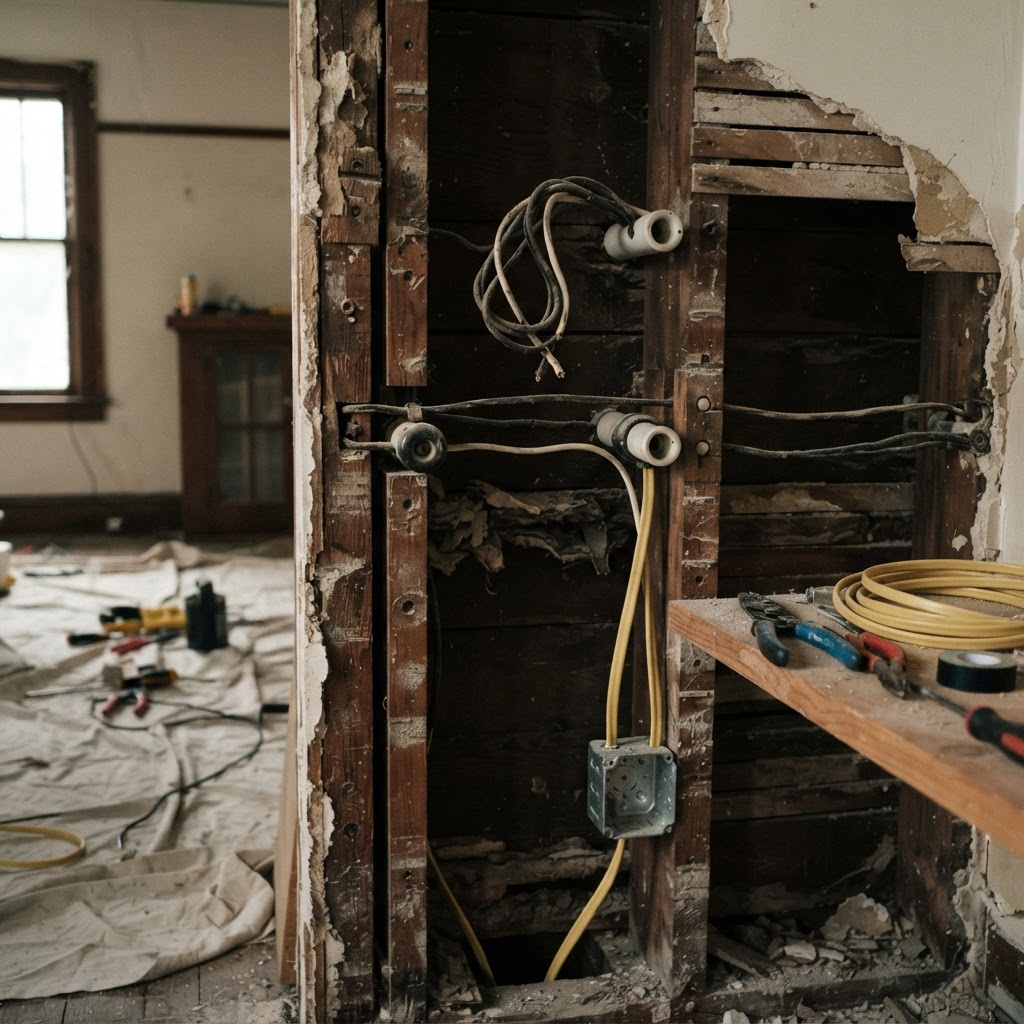
How to Replace Knob-and-Tube Wiring Safely and Smartly
Knob-and-tube wiring is one of the most common and dangerous electrical hazards in older homes. Learn what it involves, why it must go, and how to plan a safe, code-compliant replacement.
How to Replace Knob-and-Tube Wiring Safely and Effectively
Knob-and-tube wiring is one of the most common electrical hazards found in homes built before 1950. Learn why replacing it is essential and how to approach the project the right way.