How to Safely Replace Knob-and-Tube Wiring in Older Homes
Knob-and-tube wiring is a hidden fire hazard lurking in millions of pre-1950 homes. Learn what replacement involves, why it matters, and how to work with contractors to modernize your electrical system safely.
What Is Knob-and-Tube Wiring and Why Does It Matter
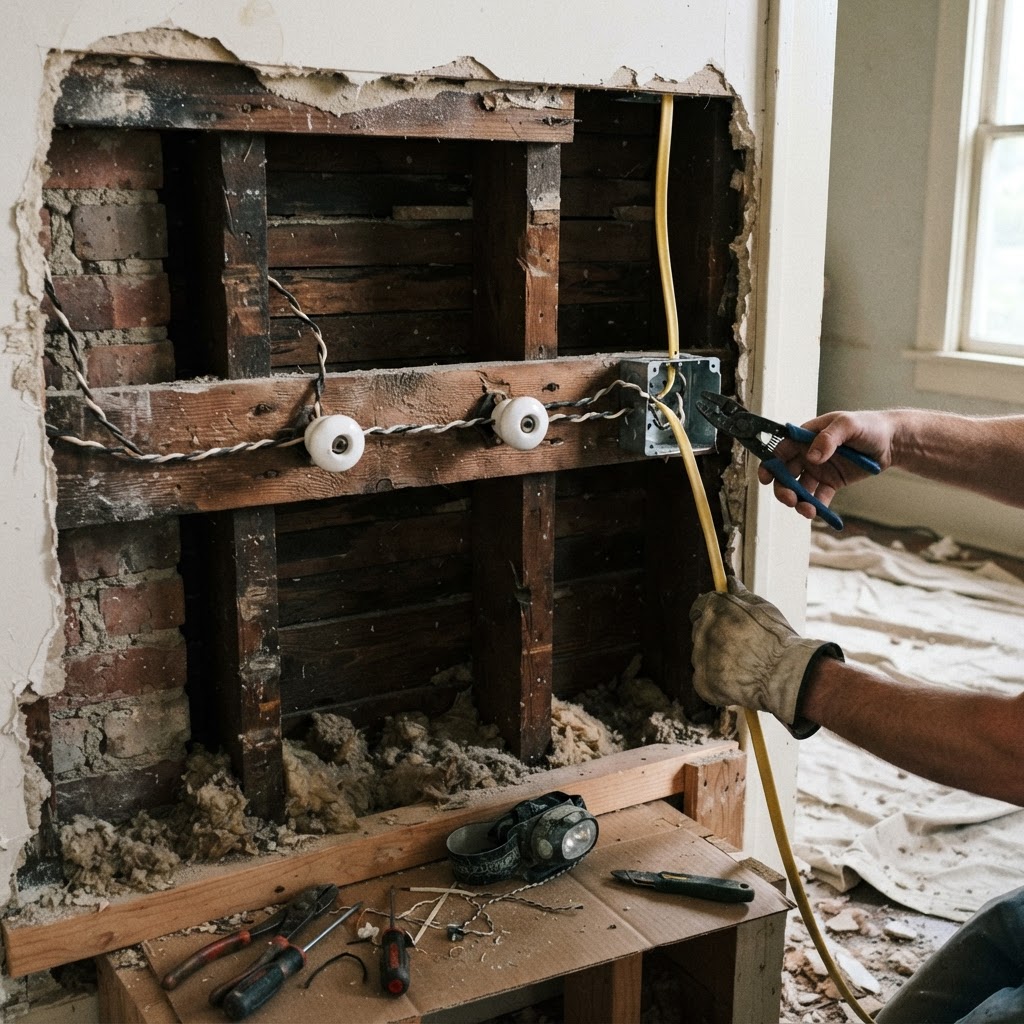
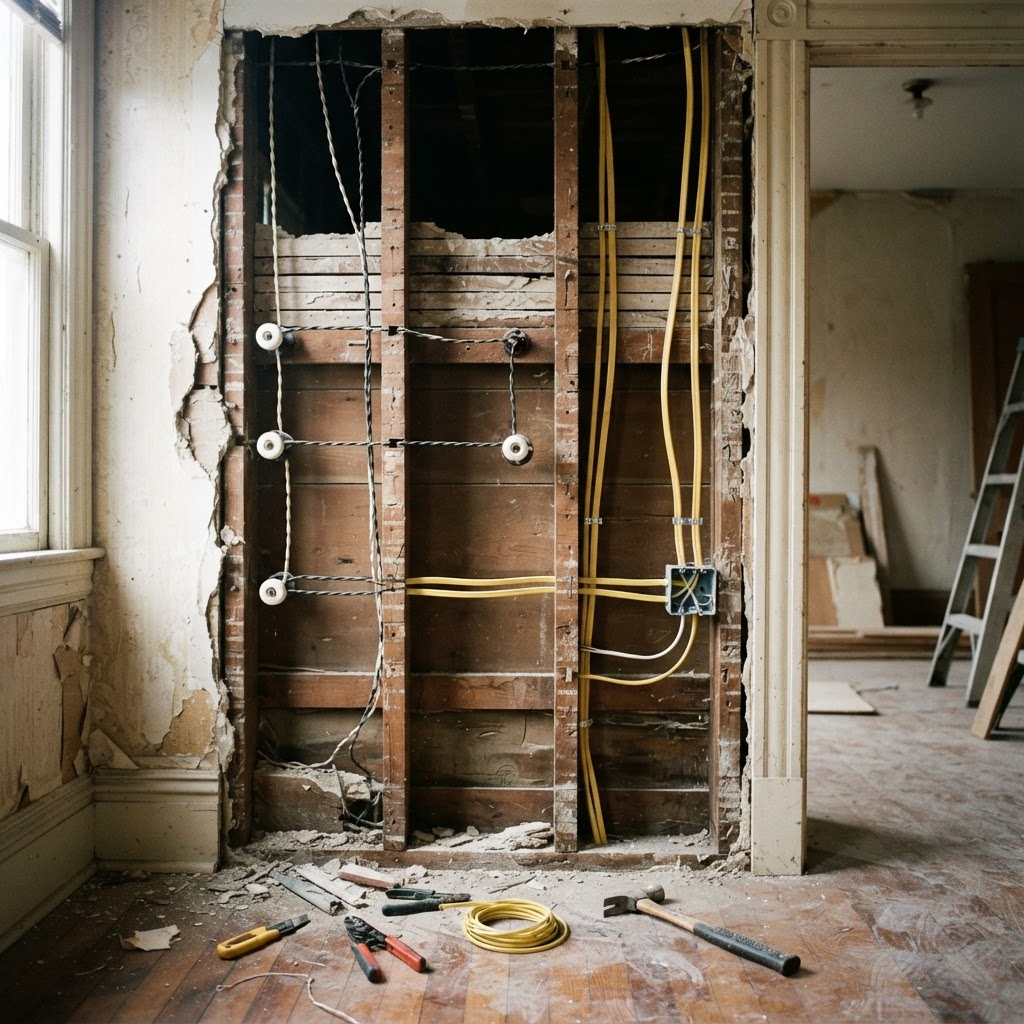
Knob-and-tube (K&T) wiring was the standard electrical installation method in American homes built roughly between 1880 and 1940. It gets its name from the ceramic knobs used to anchor wires along framing members and the ceramic tubes threaded through joists and studs to protect wires where they pass through wood. At the time, it was a reasonable system — but that time has long passed.
Today, knob-and-tube wiring represents one of the most serious electrical hazards in older homes. The rubber insulation surrounding K&T conductors has a lifespan of roughly 25 years. In a home that's 80 to 100 years old, that insulation is almost certainly cracked, brittle, or entirely absent in places. Exposed conductors near wood framing and blown-in insulation create a genuine fire risk that most homeowners underestimate.
Insurance companies have taken notice. Many insurers now refuse to write policies — or will charge dramatically higher premiums — for homes with active knob-and-tube wiring. If you're buying or refinancing an older property, your lender or inspector may require remediation before the transaction can close.
The Real Risks of Leaving It in Place
Beyond deteriorating insulation, K&T systems have no ground wire. Modern appliances, power strips, and electronics rely on a three-wire grounded circuit for safe operation. Running modern loads through an ungrounded two-wire system can cause equipment damage, shock hazards, and nuisance tripping — or worse, overheating at connections.
Another critical problem is what previous owners may have done to the system. Decades of amateur modifications — spliced wires hidden inside wall cavities, oversized fuses bypassing circuit protection, added outlets tied onto aging circuits — compound the original hazard significantly. A circuit that was designed for a 60-watt lamp in 1930 may now be powering a refrigerator, microwave, and multiple device chargers simultaneously.
Perhaps the most dangerous scenario involves insulation. When blown-in attic insulation was added over old K&T wiring — a common energy upgrade in the 1970s and 1980s — it trapped heat around conductors that were designed to dissipate heat in open air. This dramatically increases the risk of insulation igniting from an overloaded wire.
What Full Replacement Involves
Replacing knob-and-tube wiring is a whole-house rewiring project. A licensed electrician will run new NM-B (Romex) or conduit-protected wiring from an upgraded panel to every circuit in the home. In occupied historic homes, this typically involves fishing wire through finished walls, which requires cutting small access holes in plaster or drywall, then patching afterward.
The project generally proceeds in phases: the electrician installs new circuits and devices first, then the old wiring is de-energized and physically removed where accessible. In walls that are opened during renovation, complete removal is straightforward. In untouched walls, old wires may sometimes be abandoned in place after disconnection — but local codes vary, so confirm requirements with your inspector.
Expect the project to take three to seven days for a typical 1,500 to 2,500 square foot home, depending on complexity. A panel upgrade from 100-amp to 200-amp service is frequently recommended — and sometimes required — alongside rewiring, since modern household electrical loads routinely exceed what older panels were designed to handle.
Code, Permits, and Working with Contractors
Always pull permits for a rewiring project. This is non-negotiable. Permitted work is inspected by your local authority having jurisdiction (AHJ), which protects you legally, ensures code compliance, and is required for insurance and future resale. Unpermitted electrical work can void your homeowner's insurance and complicate a sale years down the road.
Get at least three bids from licensed master electricians who have specific experience with older homes. Ask each contractor how they handle plaster walls, whether they coordinate with a plasterer for patching, and how they document the new circuit layout. A reputable contractor will provide a panel directory and as-built notes.
Budget realistically. Whole-house rewiring in an older home typically runs $8,000 to $20,000 or more depending on size, region, and complexity. It's a significant investment — but compared to the cost of a house fire or an uninsurable property, it's one of the highest-value safety upgrades you can make in an older home.
More Modernization Guides
How to Replace Knob-and-Tube Wiring in Older Homes
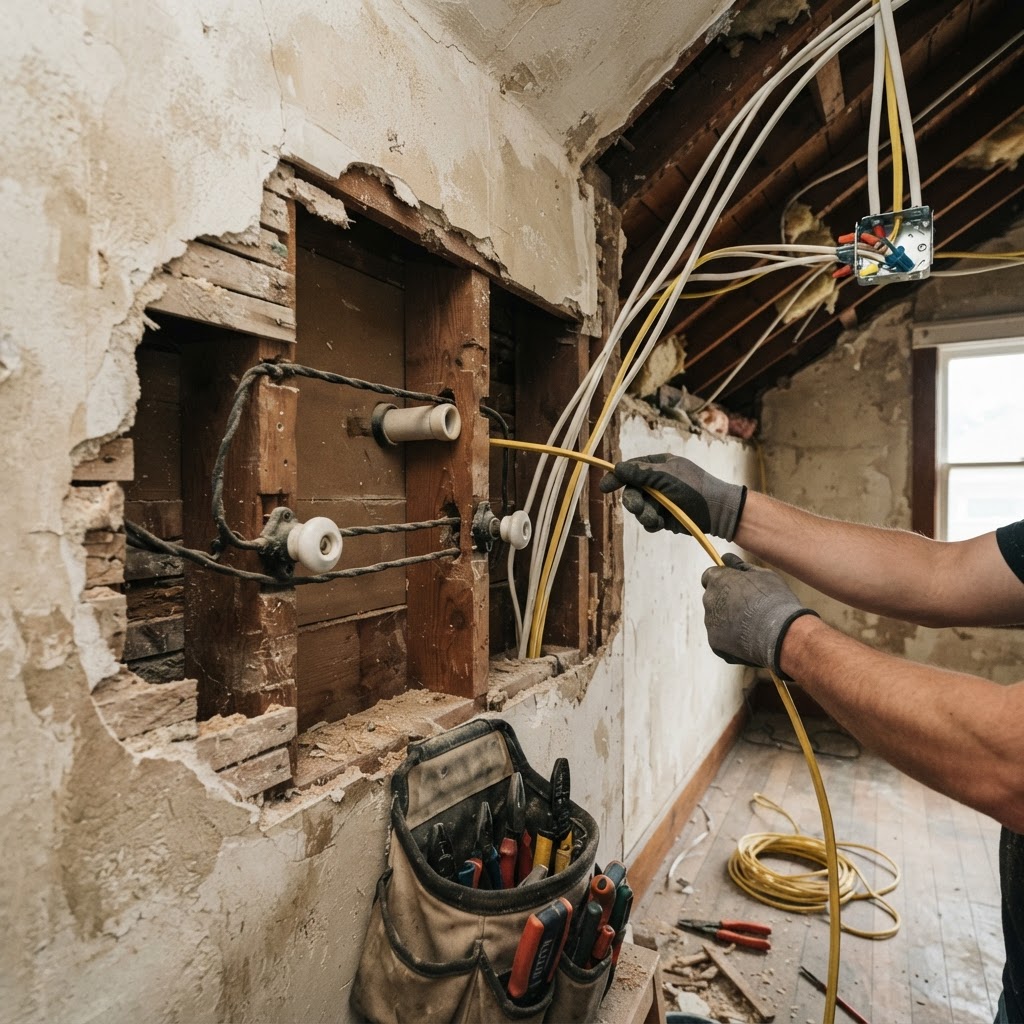
Knob-and-tube wiring is one of the most common—and dangerous—electrical hazards found in homes built before 1950. Learn what replacing it involves, why it matters, and how to do it safely and to code.
How to Replace Knob-and-Tube Wiring in Older Homes
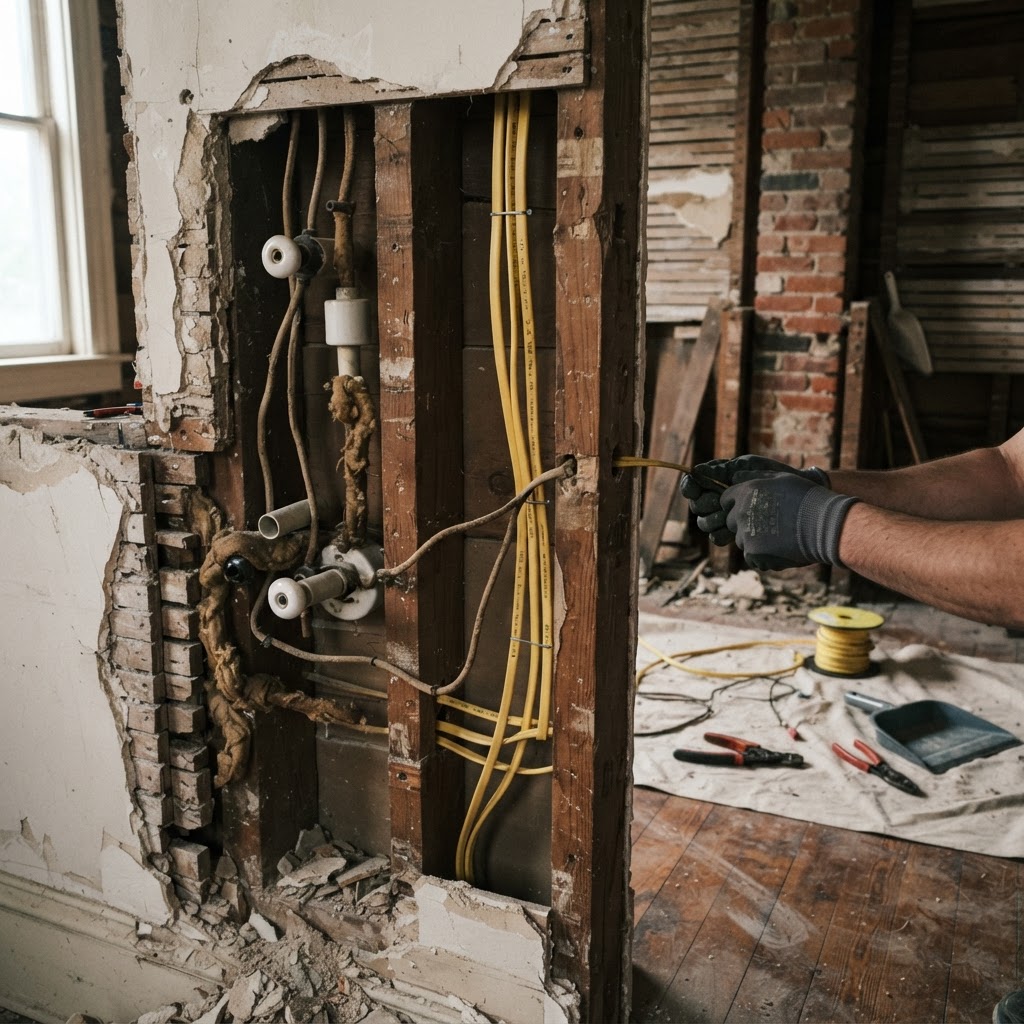
Knob-and-tube wiring is one of the most common and dangerous electrical hazards found in homes built before 1950. Learn why replacing it is essential and how to approach the project safely and effectively.
How to Replace Knob-and-Tube Wiring Safely and Smartly
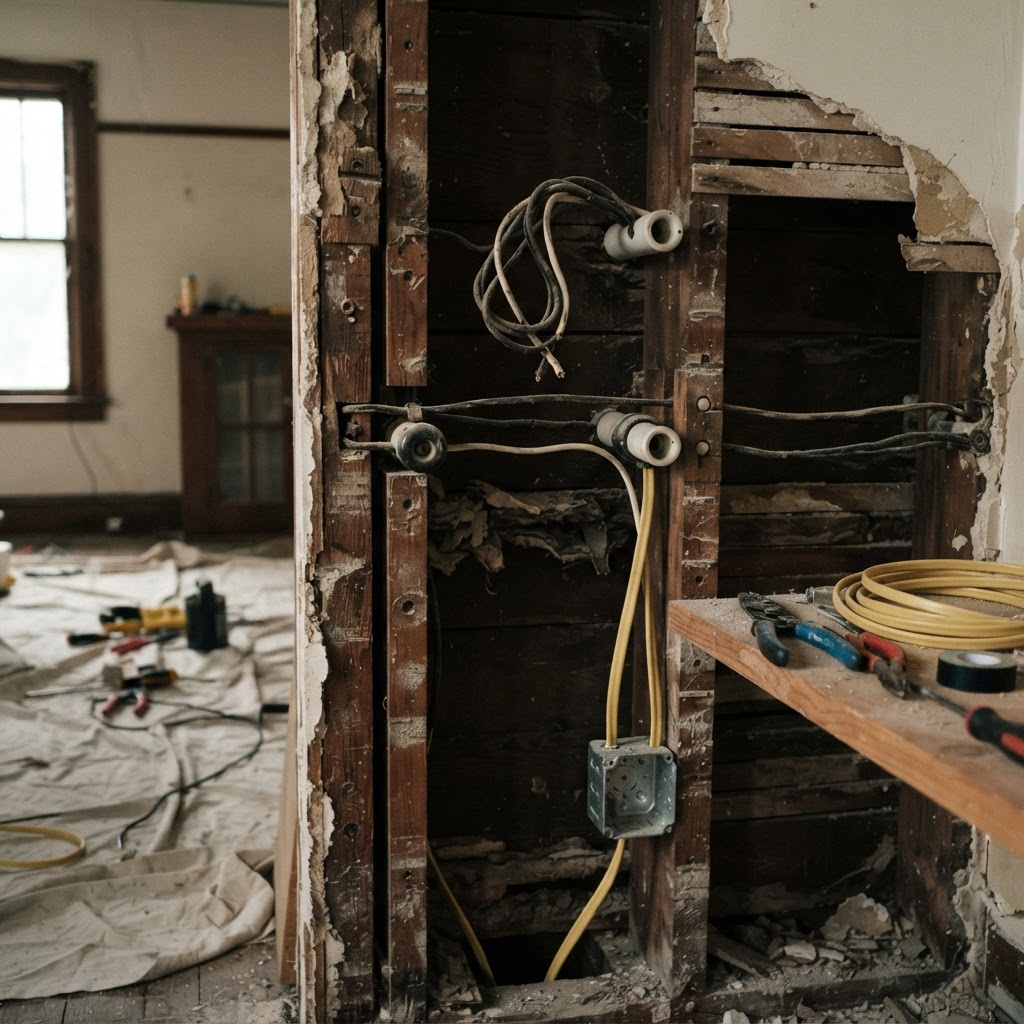
Knob-and-tube wiring is one of the most common and dangerous electrical hazards in older homes. Learn what it involves, why it must go, and how to plan a safe, code-compliant replacement.
How to Replace Knob-and-Tube Wiring Safely and Effectively
Knob-and-tube wiring is one of the most common electrical hazards found in homes built before 1950. Learn why replacing it is essential and how to approach the project the right way.