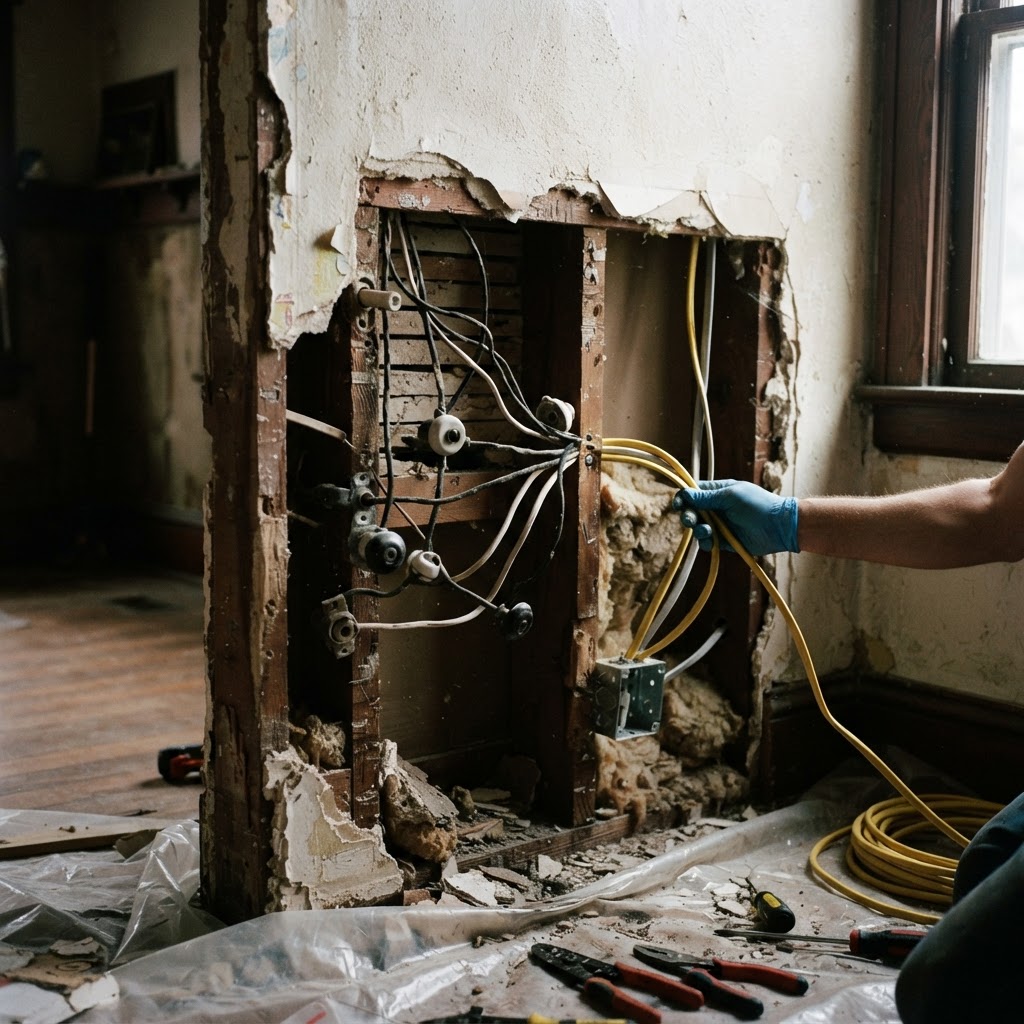
How to Safely Replace Knob-and-Tube Wiring in Older Homes
Knob-and-tube wiring is one of the most common and dangerous electrical hazards found in homes built before 1950. Learn what the replacement process involves, why it matters, and how to work with contractors to get it done safely and to code.
Why Knob-and-Tube Wiring Is Still a Problem Today
Millions of American homes built before 1950 still contain knob-and-tube (KT) wiring — a system that was considered state-of-the-art in the early 20th century but is now recognized as a serious fire and safety hazard. Named for the ceramic knobs that anchor the wires to framing members and the ceramic tubes that protect wires passing through wood, this system was designed for a world that ran on a fraction of today's electrical demand. It was never meant to power dishwashers, air conditioners, or modern kitchen appliances.
Knob-and-tube wiring lacks a ground wire entirely, meaning it cannot safely support three-prong outlets or modern appliances that require grounding for safe operation. It also uses rubber insulation that becomes brittle and cracked with age, leaving bare conductors exposed inside your walls and attic. If you own a historic or older home, there is a real chance this wiring is still active somewhere in your electrical system — and there is an equally real chance your insurance company will refuse to cover you, or will surcharge your premiums significantly, once they find out.
The Risks of Leaving It in Place
The most immediate danger from aging knob-and-tube wiring is fire. When insulation deteriorates or connections loosen over decades of thermal expansion and contraction, arcing can occur inside wall cavities where it smolders undetected. The open-air design of KT wiring actually dissipates heat reasonably well under light loads, but the moment someone overloads a circuit — by plugging a space heater into an old two-prong outlet on a KT circuit, for example — that design becomes a liability. Heat builds up with nowhere to go.
Another underappreciated danger is amateur modification. Generations of previous homeowners and handymen have often spliced modern wiring into old KT runs using improper junction boxes or no boxes at all. These hidden splices are exceptionally dangerous and also code violations. Before any rewiring project, a licensed electrician should inspect the entire system to identify where old and new wiring has been mixed. Additionally, blown-in insulation installed over knob-and-tube wiring in attics is a known fire hazard — the insulation traps heat the system was designed to shed, and many jurisdictions now explicitly prohibit it.
What the Rewiring Process Involves
Replacing knob-and-tube wiring is a whole-house project. It is not something that can be done circuit by circuit over several years while the old system remains live — at least not safely or practically. The process begins with a full electrical inspection and panel assessment. In most older homes, a KT replacement project goes hand-in-hand with upgrading from a 60-amp or 100-amp service to a 200-amp service and installing a modern breaker panel.
Electricians typically access wall cavities from the attic above and basement below, fishing new 12- or 14-gauge NM-B (Romex) cable through walls with minimal demolition. In plaster-and-lath homes, some selective cutting of plaster is unavoidable, particularly at outlet and switch locations. A skilled electrician working in older homes will know how to minimize damage and can often route new wiring with surprisingly little visible impact. Expect the project to take three to five days for a typical two-story home, and budget between $8,000 and $20,000 depending on home size, local labor rates, and panel upgrades required.
Code Considerations and Contractor Advice
All rewiring work requires permits and inspections — no exceptions. Any contractor who suggests skipping the permit process to save money is a contractor you should walk away from. Your local building department will require rough-in and final inspections, and in many jurisdictions, the work must be performed by a licensed master electrician. When interviewing contractors, specifically ask about their experience rewiring historic and plaster-wall homes. Ask for references from similar projects.
Once the new wiring is in place, consider installing arc-fault circuit interrupter (AFCI) breakers throughout the home — most modern codes now require them in living spaces and bedrooms, and they provide a critical additional layer of fire protection. Tamper-resistant outlets are similarly required by current code in new installations. Replacing knob-and-tube wiring is one of the highest-impact safety upgrades an older home can receive, and it immediately improves insurability, resale value, and your family's peace of mind.
More Modernization Guides
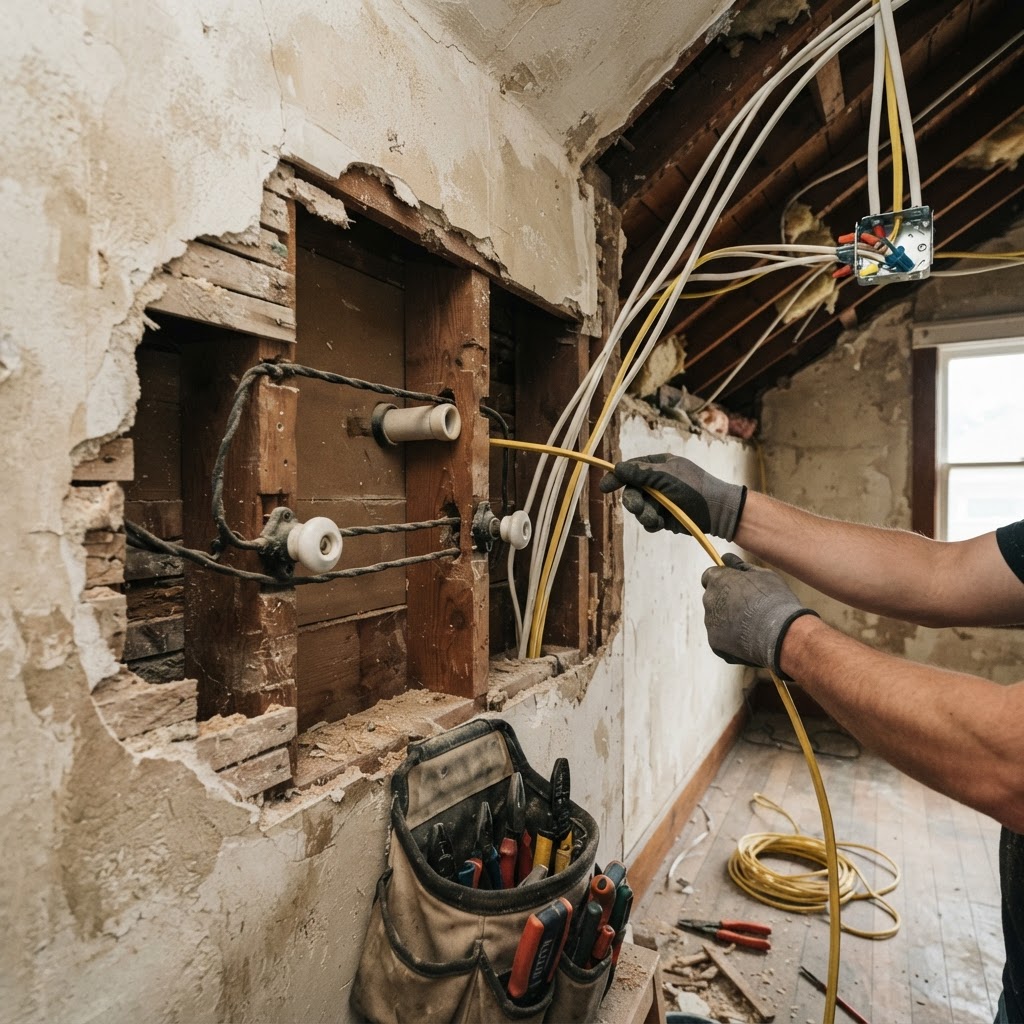
How to Replace Knob-and-Tube Wiring in Older Homes
Knob-and-tube wiring is one of the most common—and dangerous—electrical hazards found in homes built before 1950. Learn what replacing it involves, why it matters, and how to do it safely and to code.
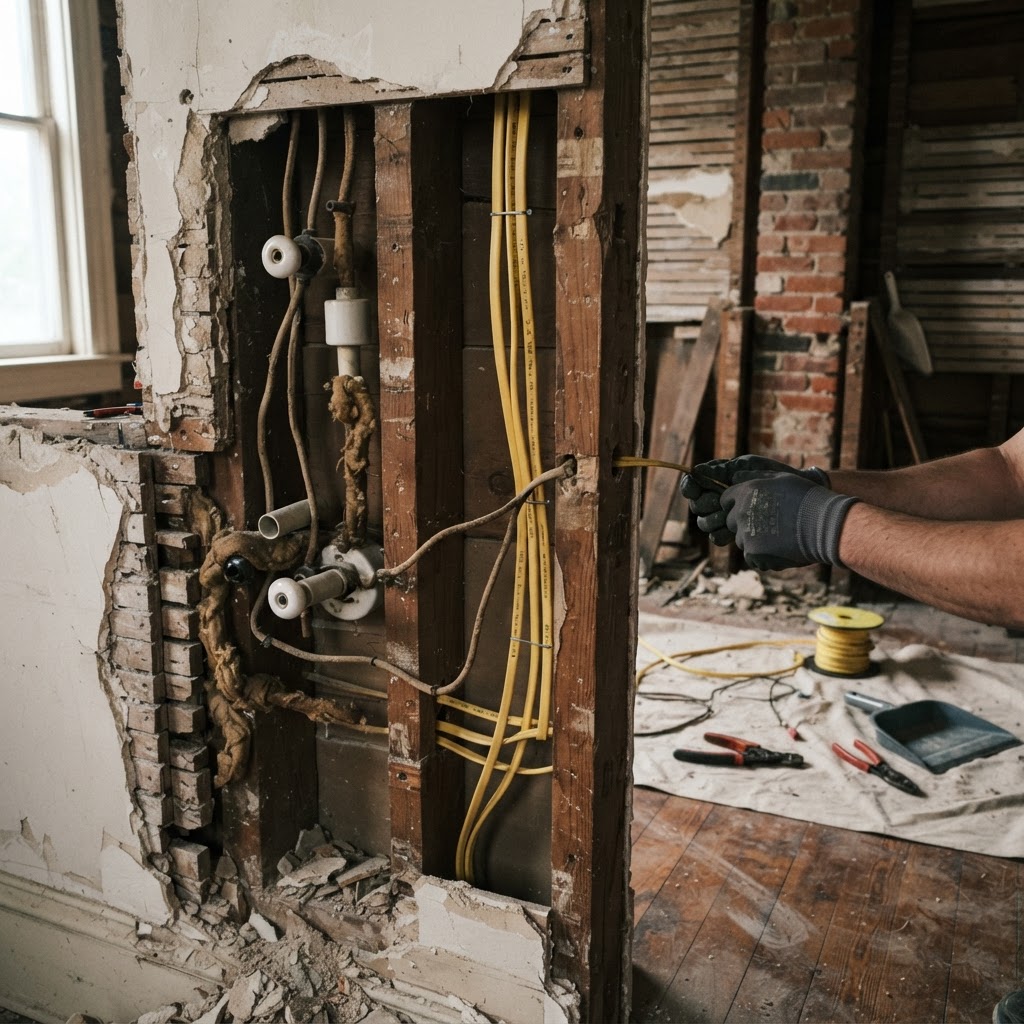
How to Replace Knob-and-Tube Wiring in Older Homes
Knob-and-tube wiring is one of the most common and dangerous electrical hazards found in homes built before 1950. Learn why replacing it is essential and how to approach the project safely and effectively.
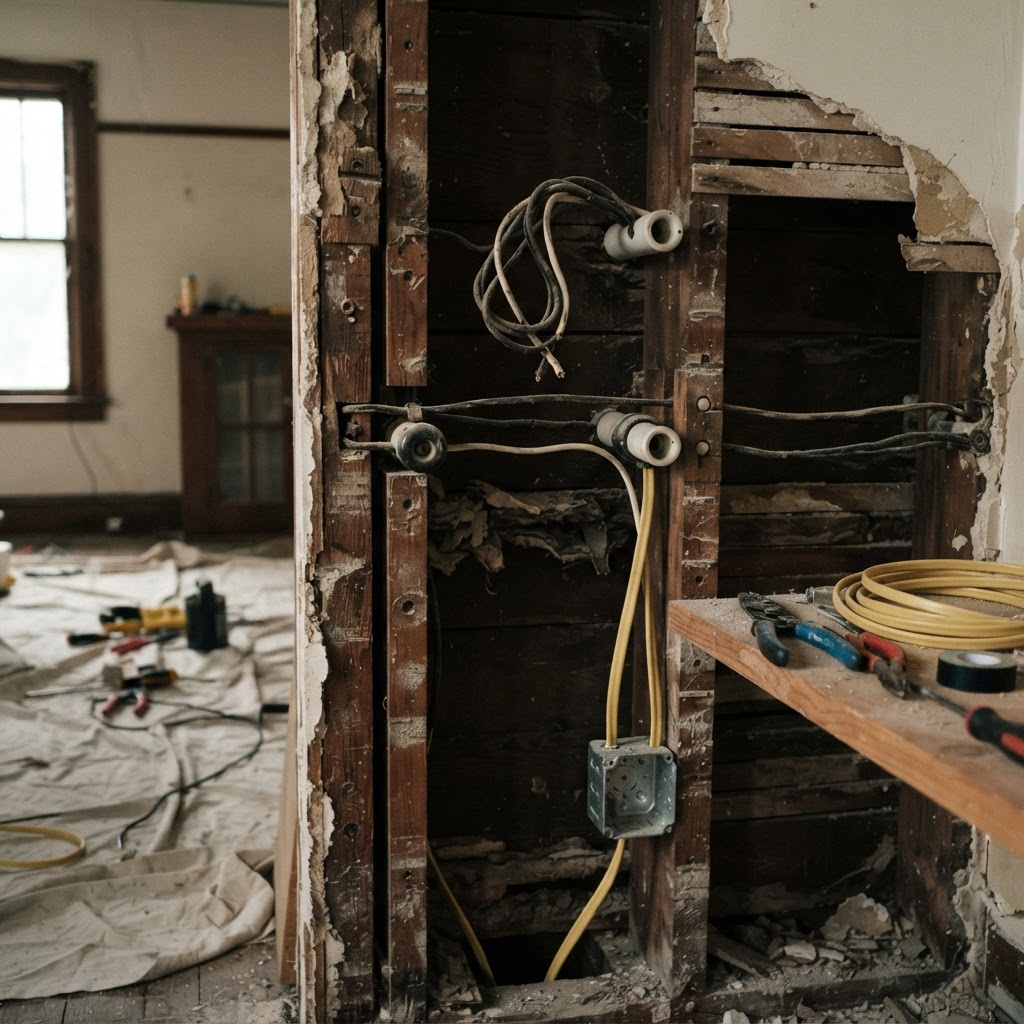
How to Replace Knob-and-Tube Wiring Safely and Smartly
Knob-and-tube wiring is one of the most common and dangerous electrical hazards in older homes. Learn what it involves, why it must go, and how to plan a safe, code-compliant replacement.
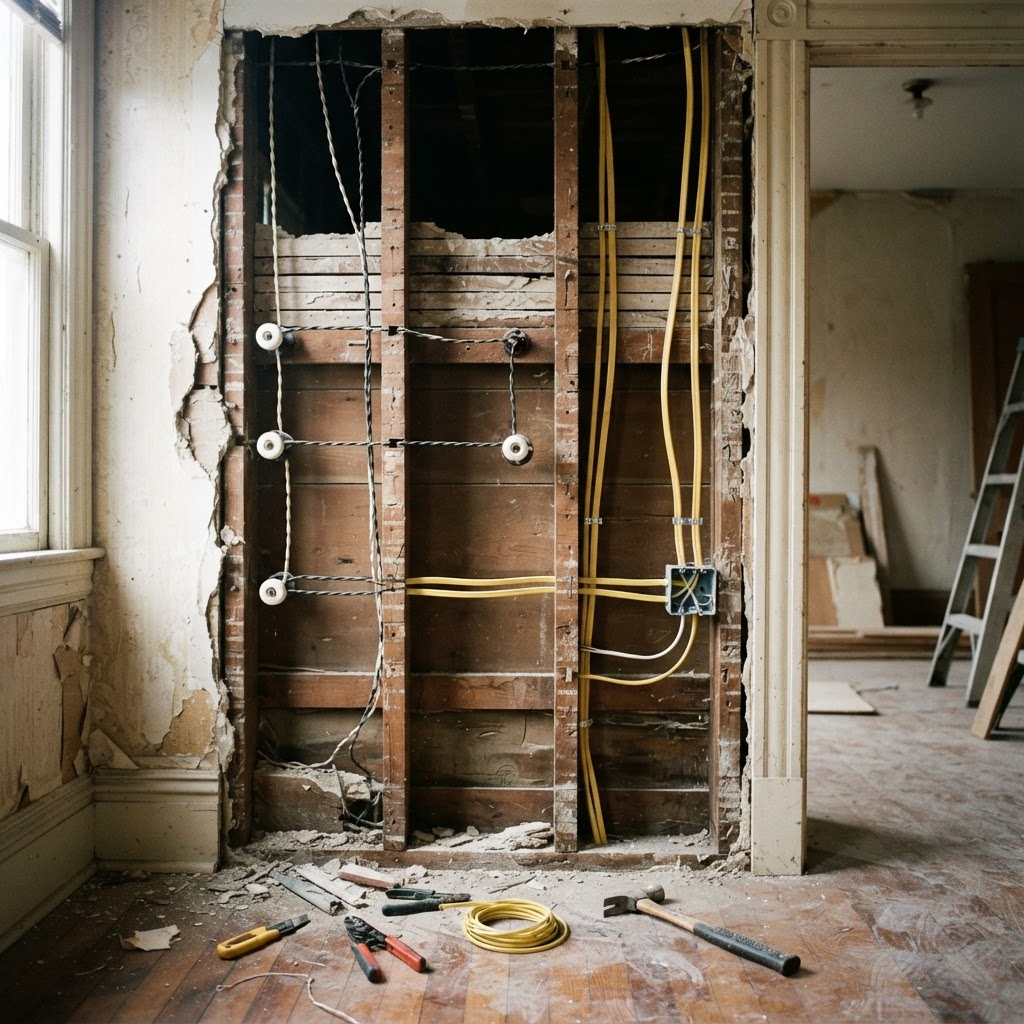
How to Replace Knob-and-Tube Wiring Safely and Effectively
Knob-and-tube wiring is one of the most common electrical hazards found in homes built before 1950. Learn why replacing it is essential and how to approach the project the right way.