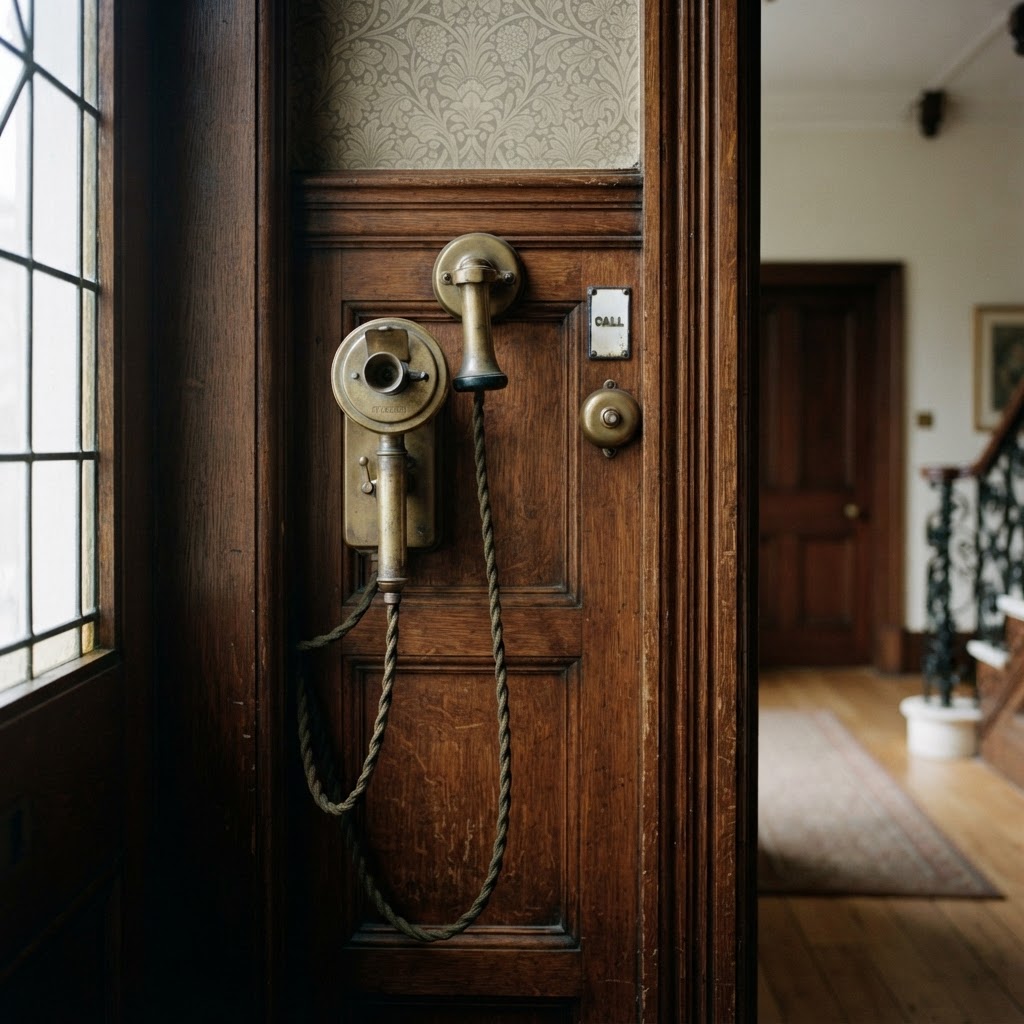
Speaking Tubes: The Victorian Intercom System in Old Homes
Speaking tubes were the original whole-home communication system, letting Victorian homeowners talk between floors without raising their voice. Discover the history, purpose, and modern potential of this fascinating architectural relic.
What Exactly Is a Speaking Tube?
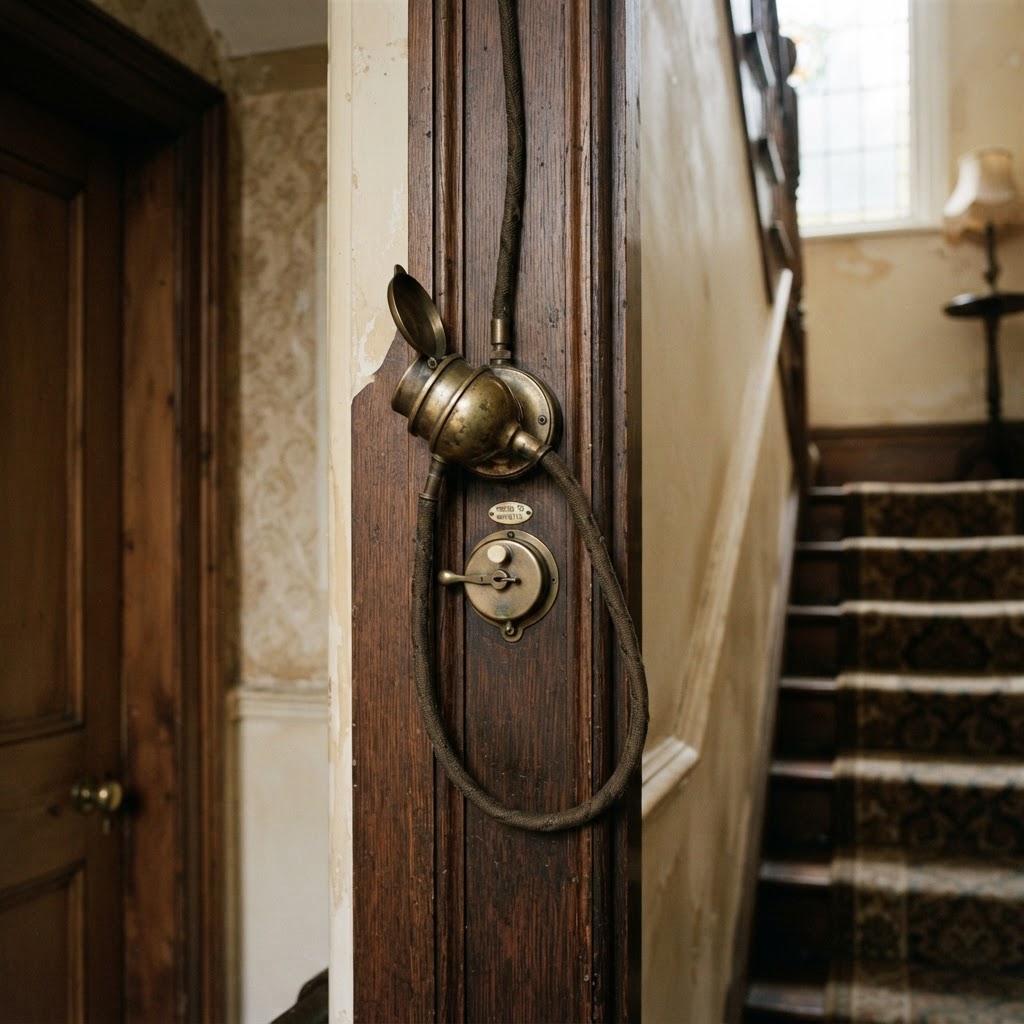
Before smartphones, before intercoms, before even electric doorbells were commonplace, wealthy homeowners had a remarkably elegant solution for communicating across large multi-story houses: the speaking tube. A speaking tube is exactly what it sounds like — a narrow pipe, typically made of brass or tin, running through the walls of a home between two or more rooms. Each end was fitted with a mouthpiece and a small whistle or bell to alert the person on the other end that someone wanted to talk.
To use one, you would blow into the tube, which would sound the whistle at the far end. The other person would remove a small stopper or cap, hold the opening to their ear, and a conversation could begin. It was low-tech, surprisingly effective, and entirely mechanical — no electricity required. Many systems also had a network of tubes branching out from a central hub, allowing communication from one room to several destinations.
The Historical Era and Purpose
Speaking tubes reached peak popularity between roughly 1850 and 1920, primarily in upper and upper-middle-class homes, as well as hotels, ships, and commercial buildings. During the Victorian and Edwardian eras, large homes were essentially small operations requiring significant coordination between family members and domestic staff. A lady of the house needed to relay instructions to the kitchen two floors below, or a bedroom needed to reach the butler's pantry without sending a servant on a wasted errand.
In these grand homes, the speaking tube was an efficiency tool as much as a luxury. Tube networks were often installed during original construction, with brass fittings and mouthpieces recessed neatly into walls near fireplaces or doorframes. High-end versions featured decorative covers that blended seamlessly with the home's woodwork and plasterwork. Ships used them extensively to relay orders from the bridge to the engine room — a use case that persisted well into the 20th century.
The system also had an important social function: it maintained the boundary between employer and servant. Rather than a family member walking into the kitchen personally, a quick blow through the tube preserved the household hierarchy while still getting the message across efficiently.
What Replaced Speaking Tubes — and When They Disappeared
The decline of speaking tubes came in two waves. First, the widespread adoption of electric servant call systems in the early 1900s — the push-button bell panels that directed staff with lighted indicators — made tubes seem outdated in the grandest homes. Then, as electric telephones became affordable for residential use through the 1920s and 1930s, communication within large homes could be handled by internal telephone switchboards.
By mid-century, the demographic of large home ownership had also shifted dramatically. Domestic servant culture had largely collapsed after World War I and World War II, and the sprawling Victorian household gave way to smaller, more self-sufficient family homes. Speaking tubes became curiosities, often plastered over during renovations or simply capped off and forgotten inside the walls.
What Homeowners Should Know If They Find One
If you live in a home built before 1920 and you discover a small brass fitting in the wall — often near a fireplace surround, in a kitchen, or in a hallway — there's a real chance you've found a speaking tube opening. Before you patch over it or remove it, take a moment to investigate. These features are considered desirable by historic preservation enthusiasts and can add genuine character and value to an older home.
First, check whether the tube is still intact by shining a flashlight into the opening. Many tubes are still fully in place inside the walls, simply capped at both ends. If you can locate both ends, cleaning and restoring the system to working order is often straightforward. Original brass fittings can be polished and preserved, and functional speaking tubes make a genuinely impressive — and conversation-starting — feature in a renovated historic home.
If restoration isn't practical, resist the urge to simply drywall over the fitting. Carefully remove and preserve the original brass components, which are historically significant and often beautifully crafted. Document their location photographically before any renovation work proceeds. Organizations dedicated to Victorian home preservation often want to know about intact examples.
Speaking tubes are a remarkable reminder that clever design doesn't always require electricity — just good engineering, quality materials, and a household that had a lot to say.
More Historic Features
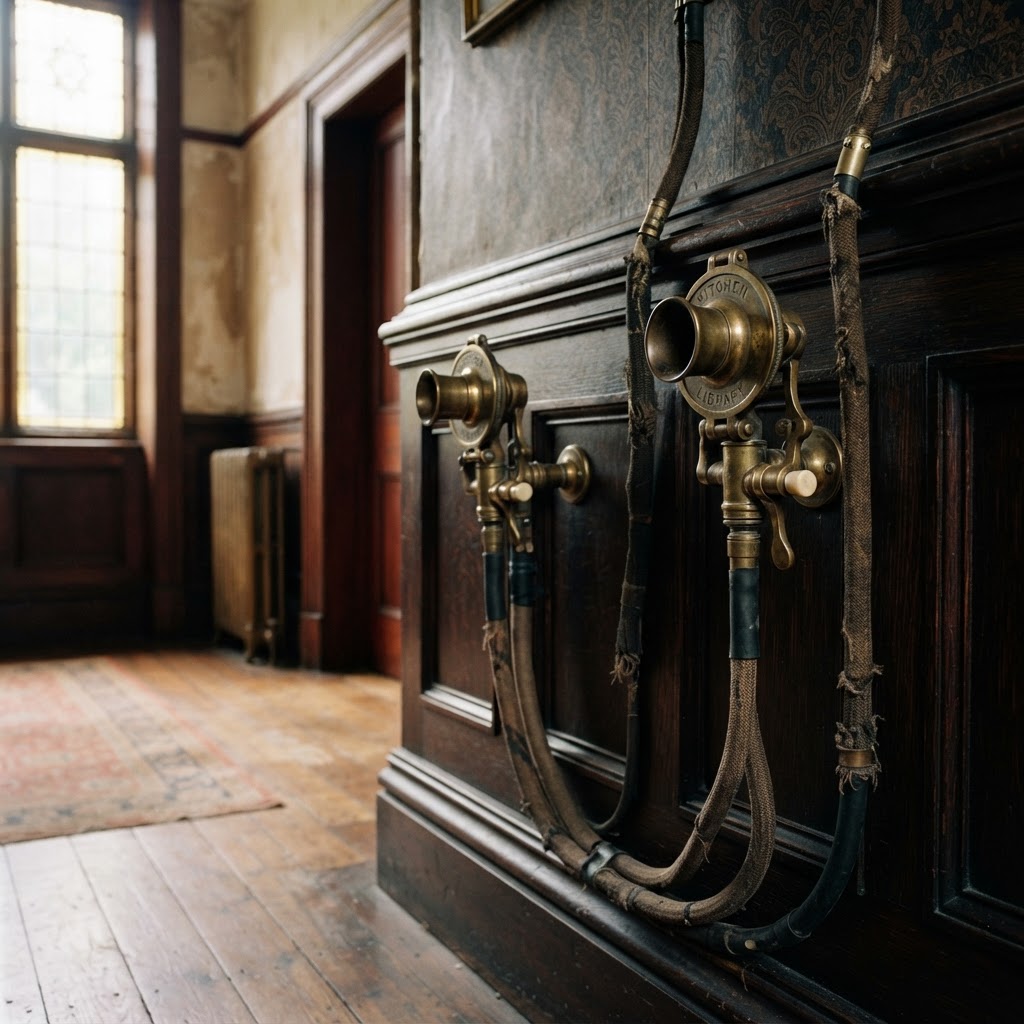
Speaking Tubes: The Victorian Smart Home Intercom System
Before intercoms and smartphones, speaking tubes let households communicate across multiple floors instantly. Discover the fascinating history of this forgotten Victorian feature and what to do if your older home still has one.
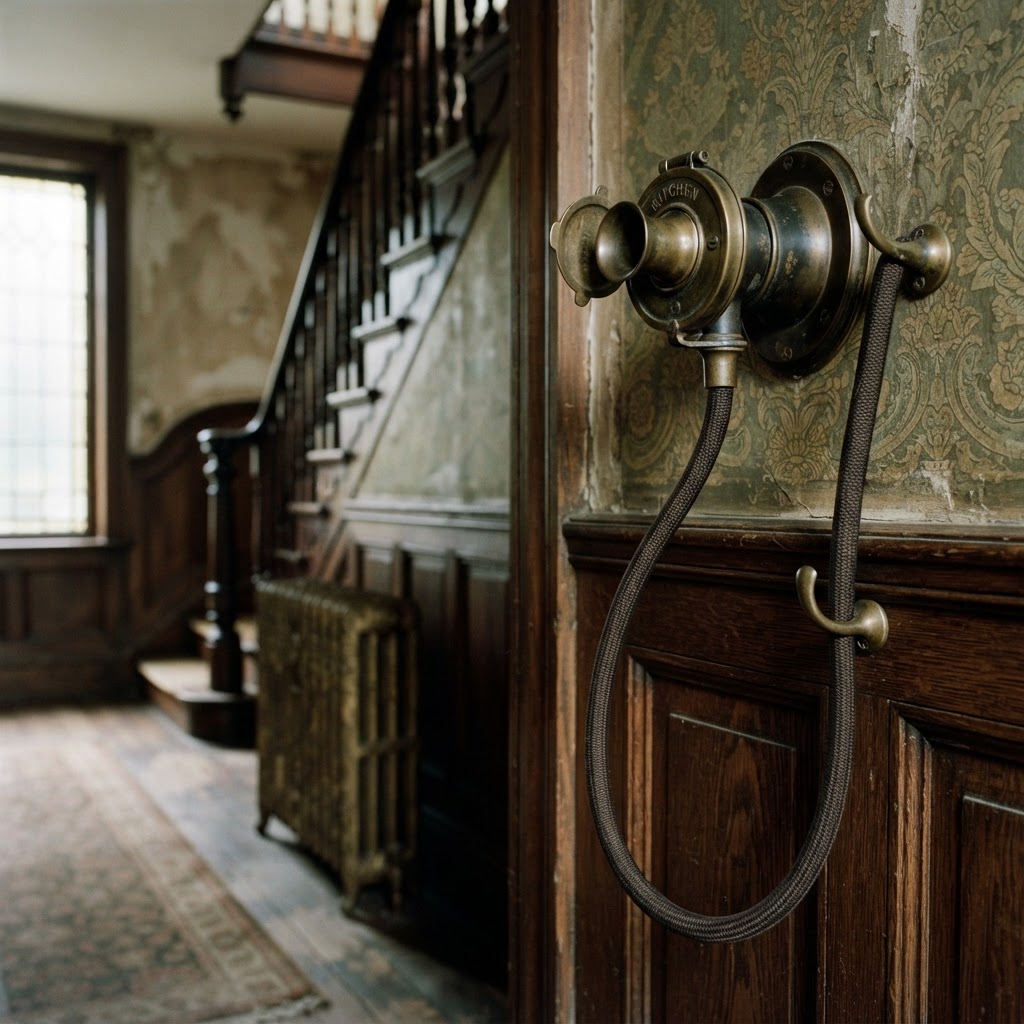
Speaking Tubes: The Victorian Smart Home Intercom System
Before intercoms and smartphones, Victorian homes used speaking tubes to communicate between floors. Discover the history, function, and modern potential of this fascinating architectural relic.
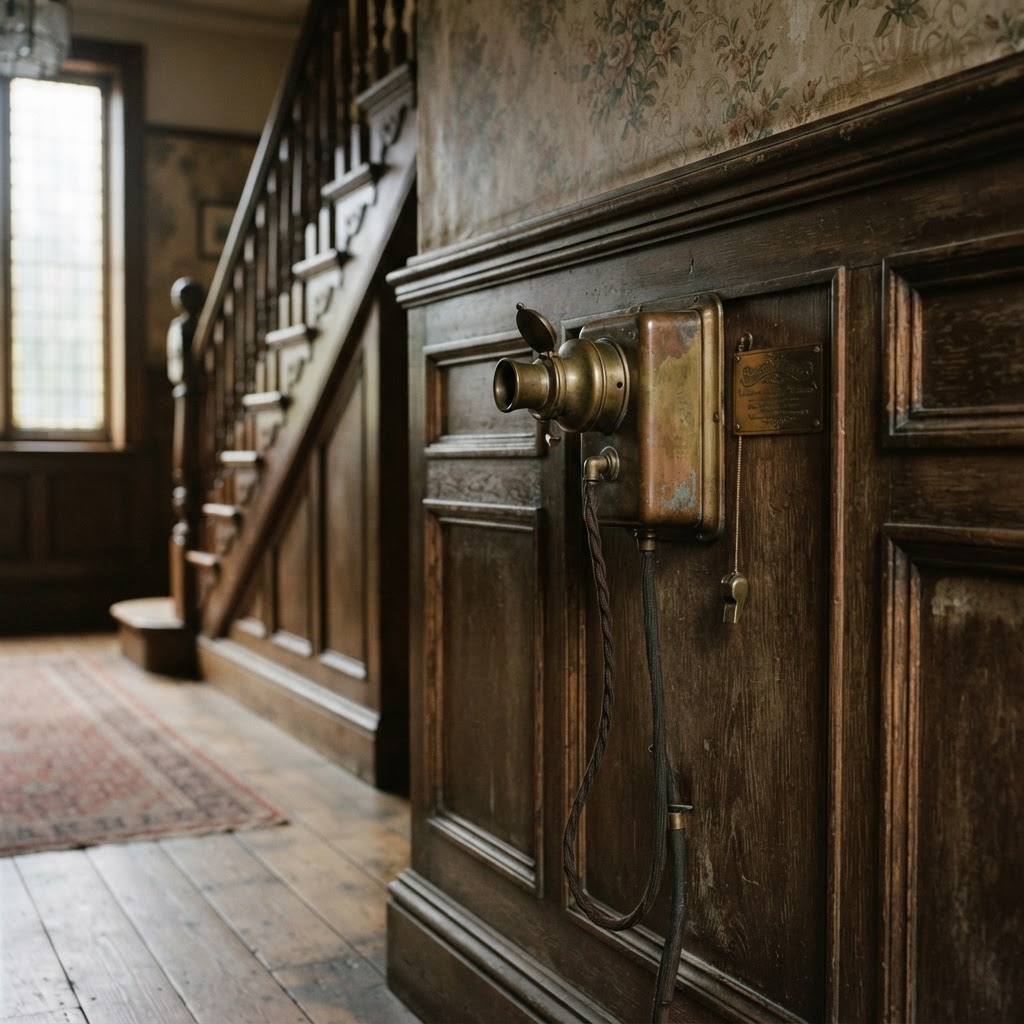
Speaking Tubes: The Victorian Intercom Hidden in Your Walls
Speaking tubes were the original home intercom system, letting residents of grand Victorian and Edwardian homes communicate across floors without raising their voices. Discover the history, function, and modern potential of this fascinating architectural relic.
Speaking Tubes: The Forgotten Intercom System in Older Homes
Before intercoms and smartphones, speaking tubes let households communicate across multiple floors instantly. Discover the history, function, and modern potential of this fascinating Victorian-era feature.